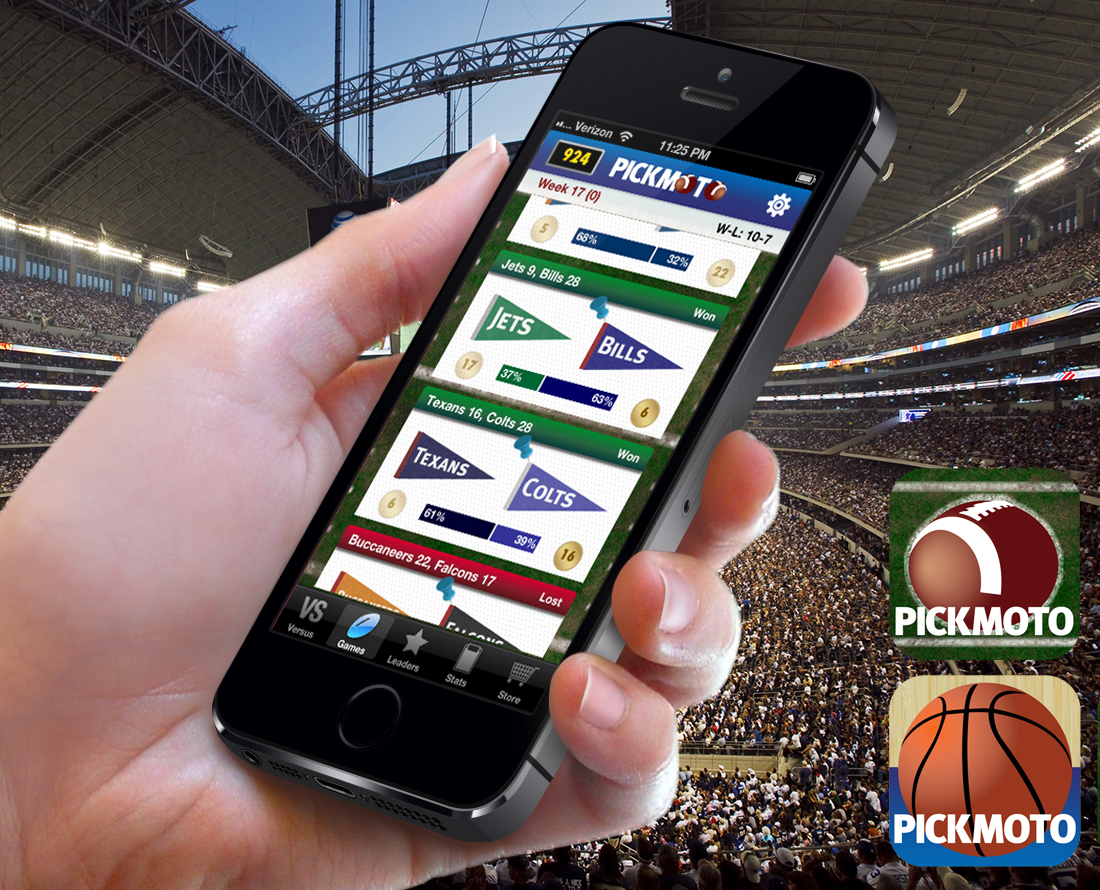
Rethought, Not Resized
Pickmoto was a mobile-first sports prediction platform built in 2012–2013 to simplify fantasy sports and office pools for smartphones. It was my first major UX/UI and product design project after starting my career in print design at National Geographic — the project where I made the jump from visual designer to product designer.
Pickmoto was founded on the belief that mobile sports gaming needed to be rethought, not resized. Rather than asking users to manage fantasy rosters or parse complex player statistics, Pickmoto focused on one simple action: pick the winner.
The Problem
Fantasy sports demanded hours of roster management and stats literacy, gatekeeping casual fans. Office pools — the most social form of sports gaming — ran on spreadsheets, email chains, and cash. Neither was built for the phone already in everyone's pocket.
The Solution
A one-tap prediction game built natively for mobile. Pick winners in seconds, earn more for bold picks, compete with friends in pools and head-to-head challenges — with stats available when you want them, never required.
"We weren't shrinking fantasy sports onto a phone. We were asking what sports gaming should look like if it had been born there."
My Role
Co-Founder & Design Lead
I co-founded the company and led design across every release — from naming, brand, and app icons through information architecture, wireframes, prototypes, and shipped UI. Working daily with engineering and my co-founders, I helped define what we built, why, and in what order.
Five Releases, Two Years, One Mechanic
Pickmoto evolved from a football pick'em concept into a multi-sport social gaming platform across four shipped releases and a final platform vision — each release testing a bigger version of the same bet: that picking winners with friends was the core experience worth building around.
MotoPick'Em — The Original MVP
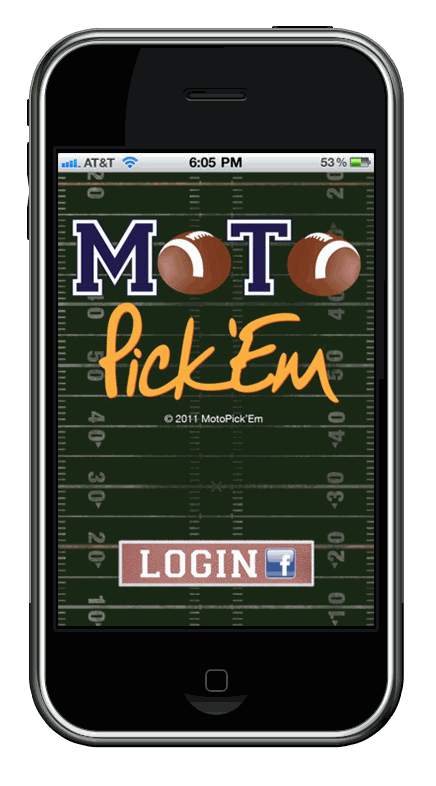
MotoPick'Em — the original 2011 build — was the seed of the company and the first to ship.
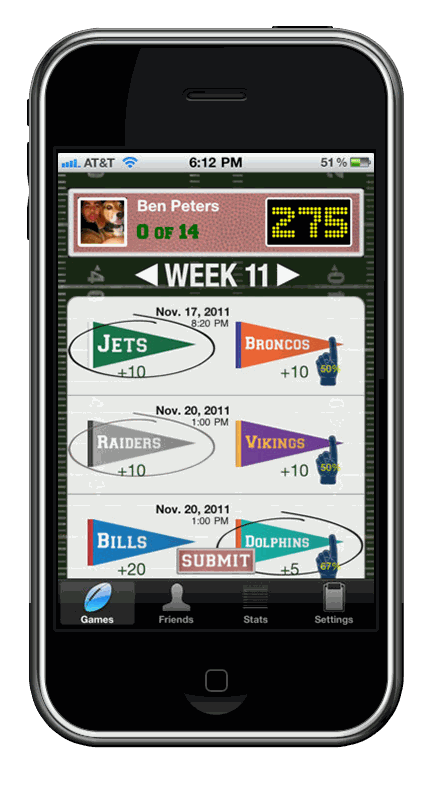
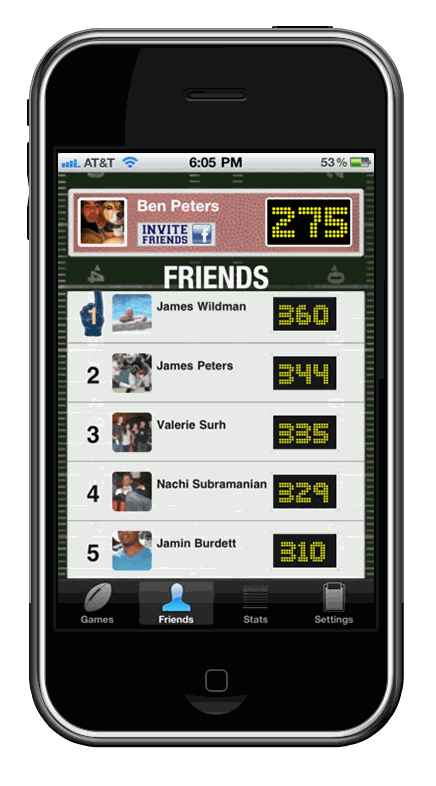
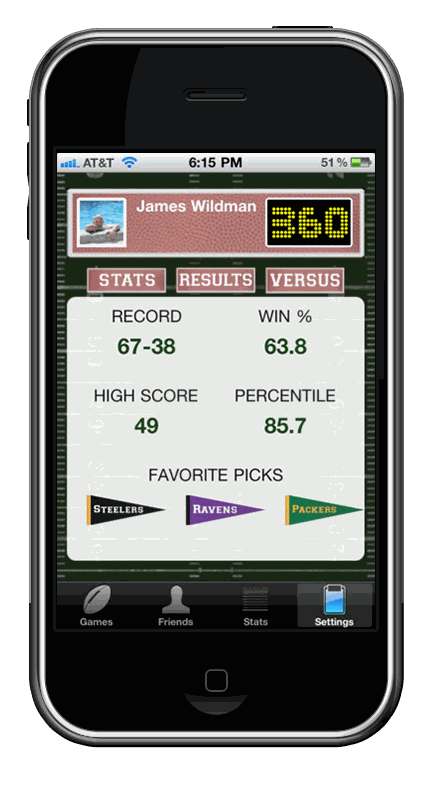
A Facebook-login football pick'em on the original gridiron-textured interface, with Games, Friends, and Stats. It first reached the App Store in this form (on the iPhone 3GS) before being rebranded as Pickmoto for the 2012 NFL season.
The scoring mechanic that would define every later release was already here: players started with 300 points, lost 10 for a wrong pick, and won the pot wagered by everyone who backed the losing team — rewarding the bold, contrarian pick over the obvious one. The screens below are the genuine, working 2011 originals.
Pickmoto 2.0 — iPhone Football Pick'em
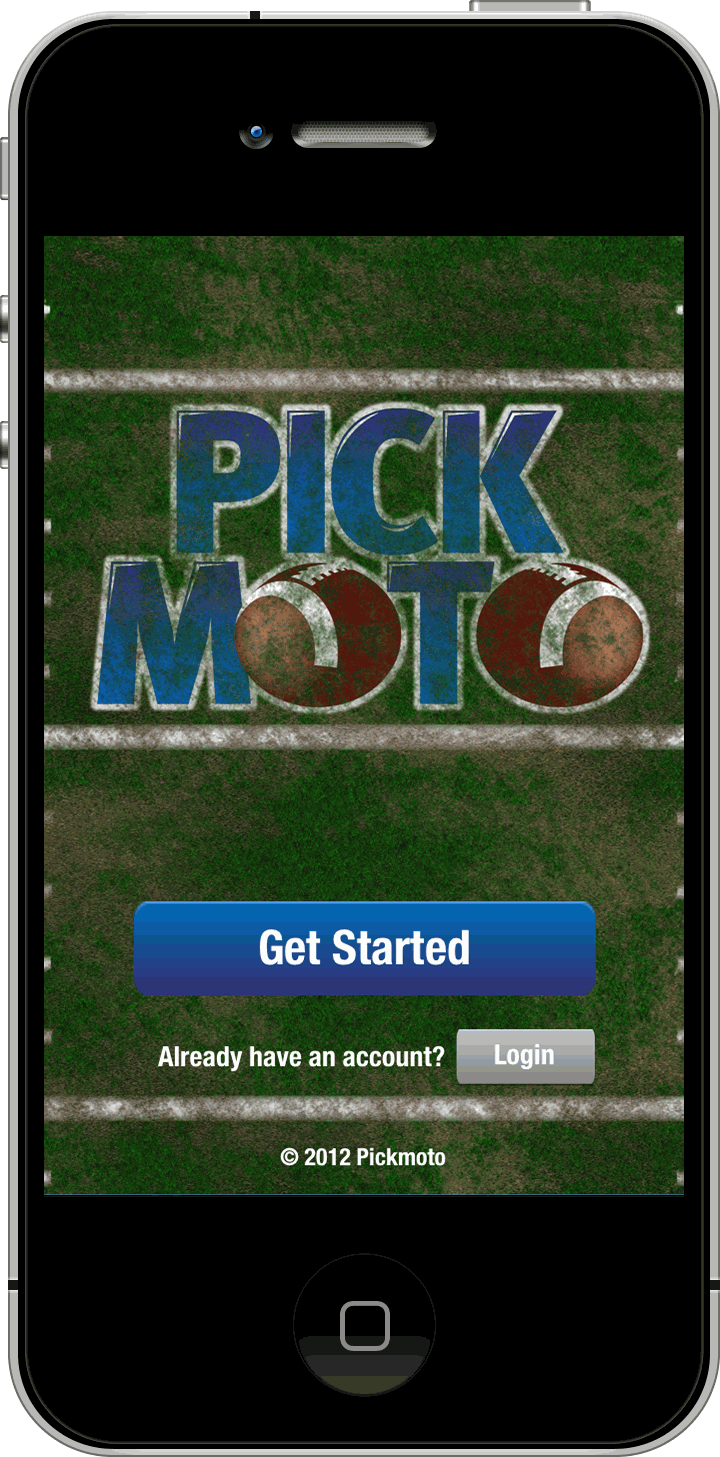
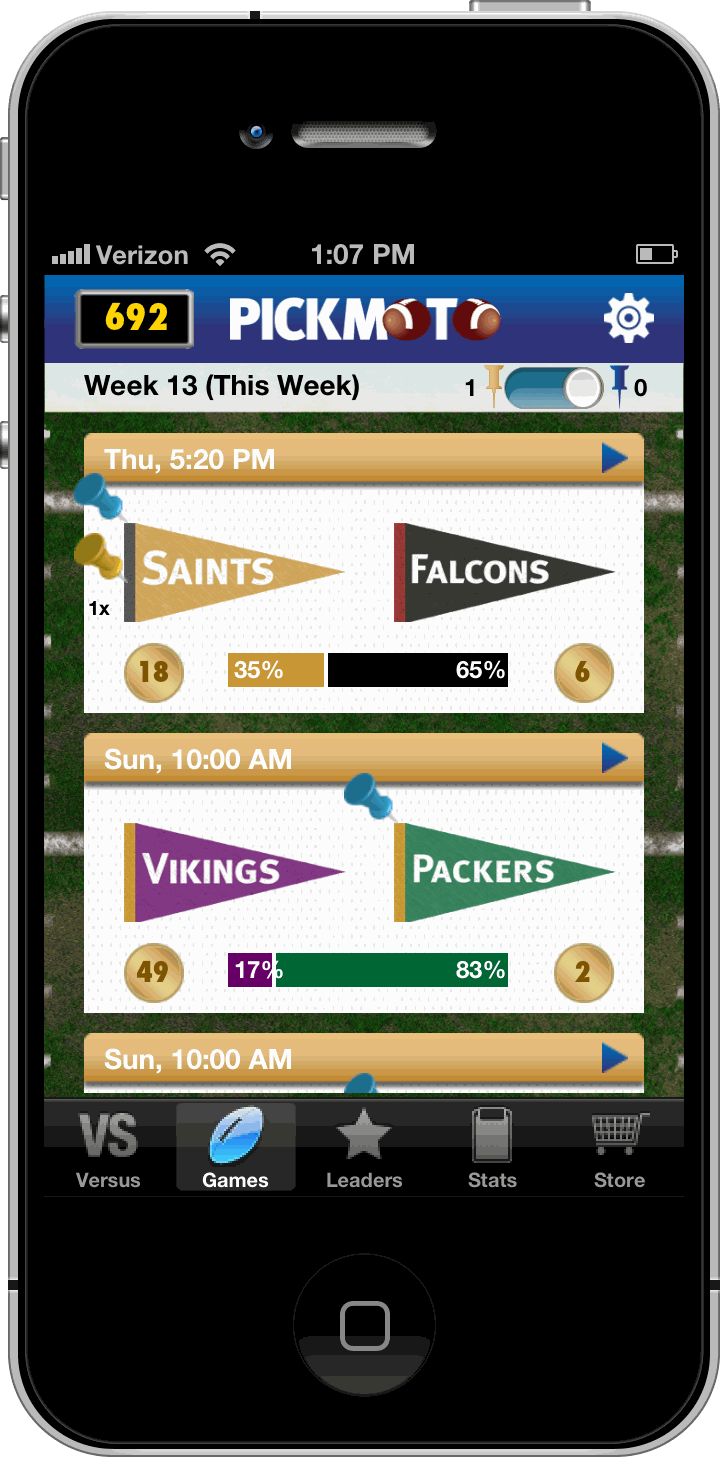
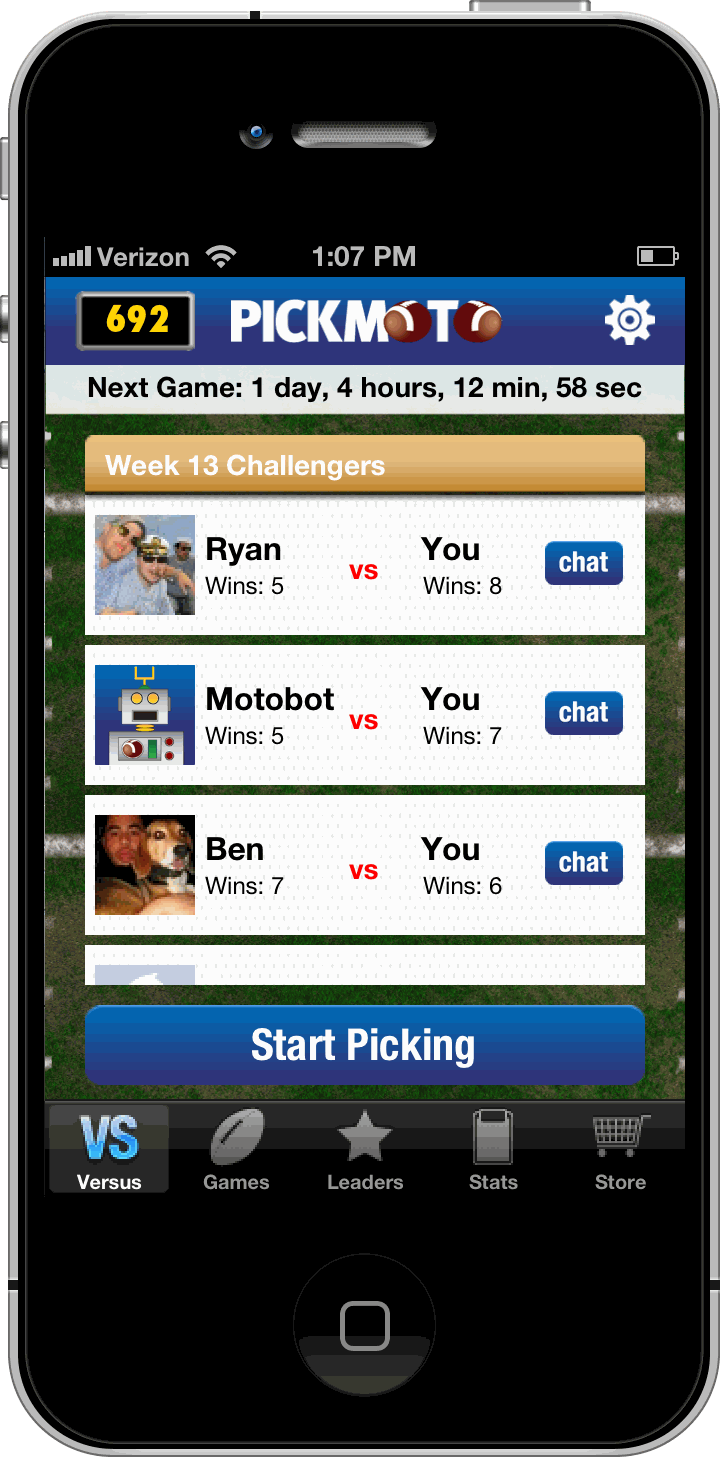
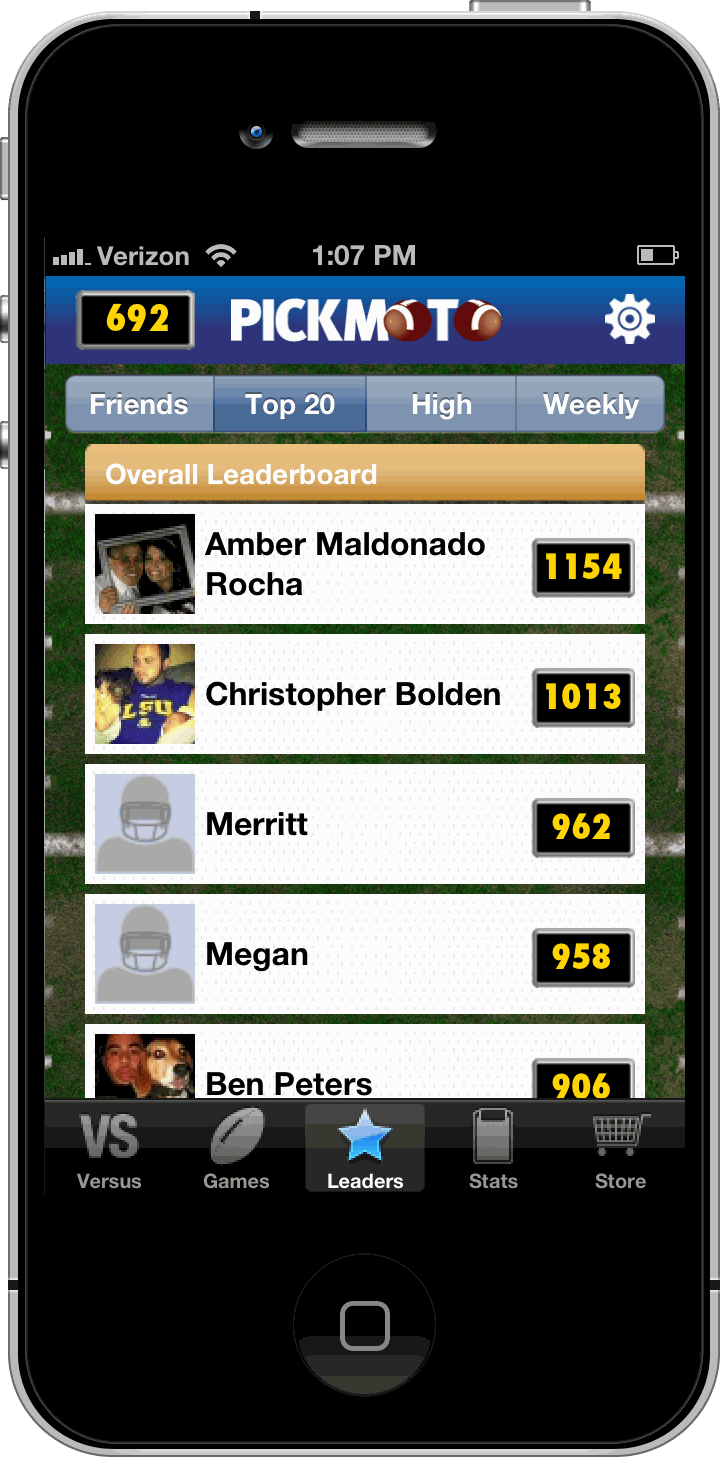
The first shipped product: every NFL game of the week as a tappable head-to-head pennant card, a running point balance, and challenges against friends — or Motobot, when no one else was around.
The core loop that everything else built on — pick the week's pennant matchups, watch your point balance move, challenge friends head-to-head, and climb the leaderboard. GamesBeat covered the launch in September 2012.
iPad Edition — A Bigger Canvas
The mechanic proved portable — and the iPad gave it room to breathe.
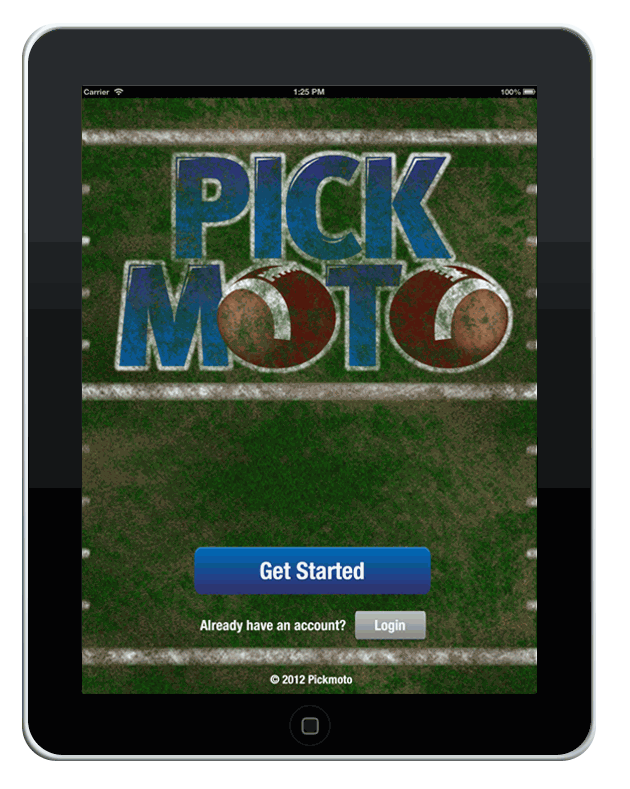
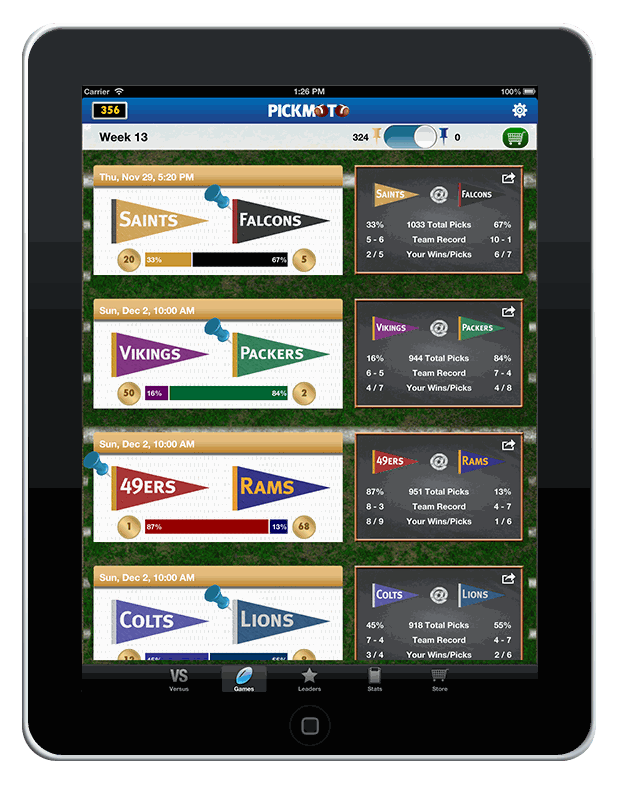
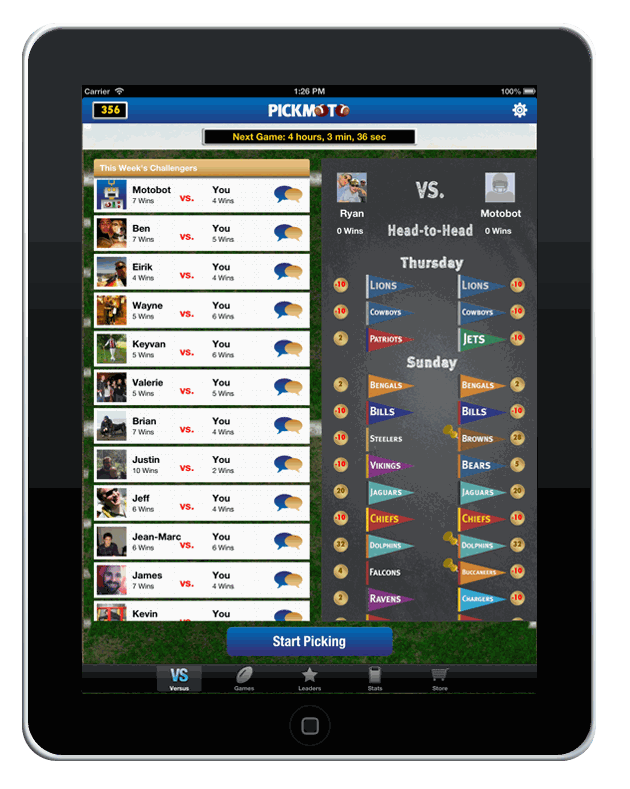
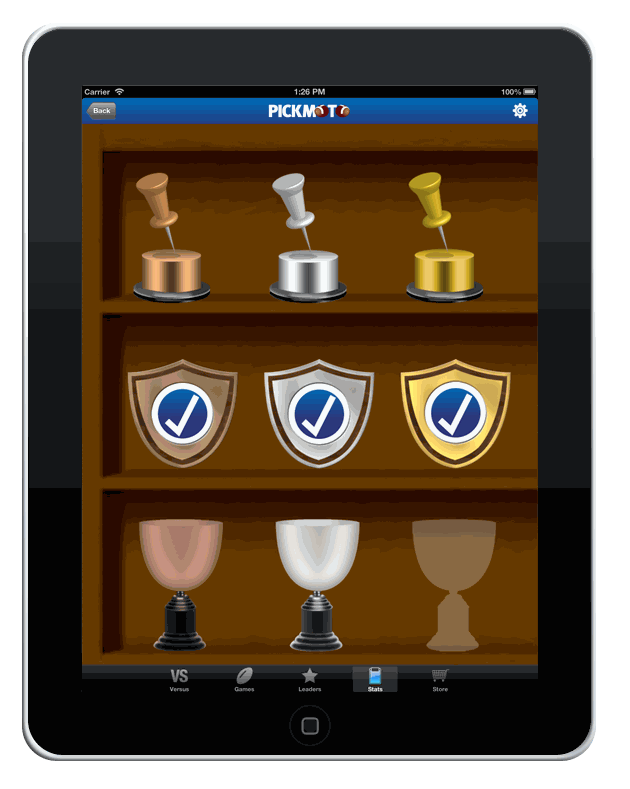
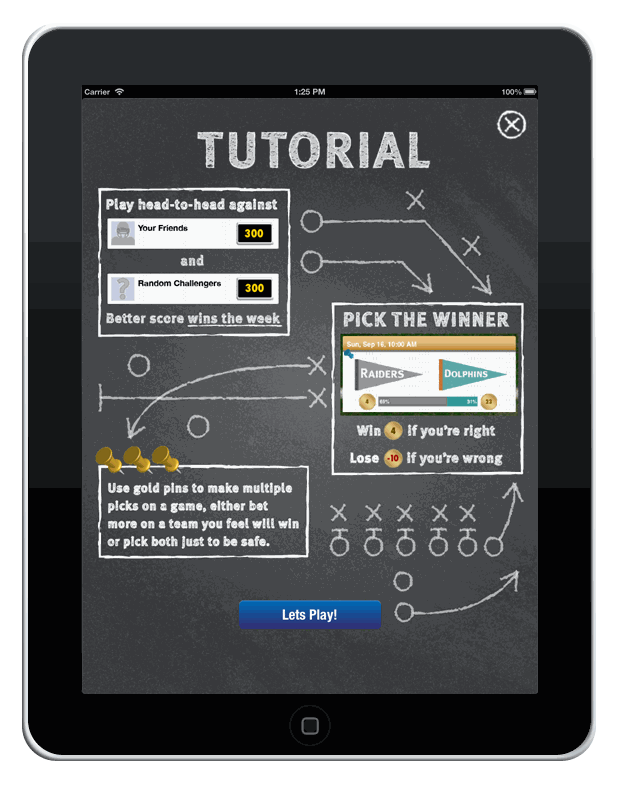
The iPad edition rebuilt the experience for a larger screen: a chalkboard tutorial taught the pick-to-win loop, full-week pennant matchups scanned at a glance, head-to-head challenges ran alongside the bracket, and a trophy case rewarded the season.
NBA Edition — Hoops, Head-to-Head
Basketball brought the social layer to the front.
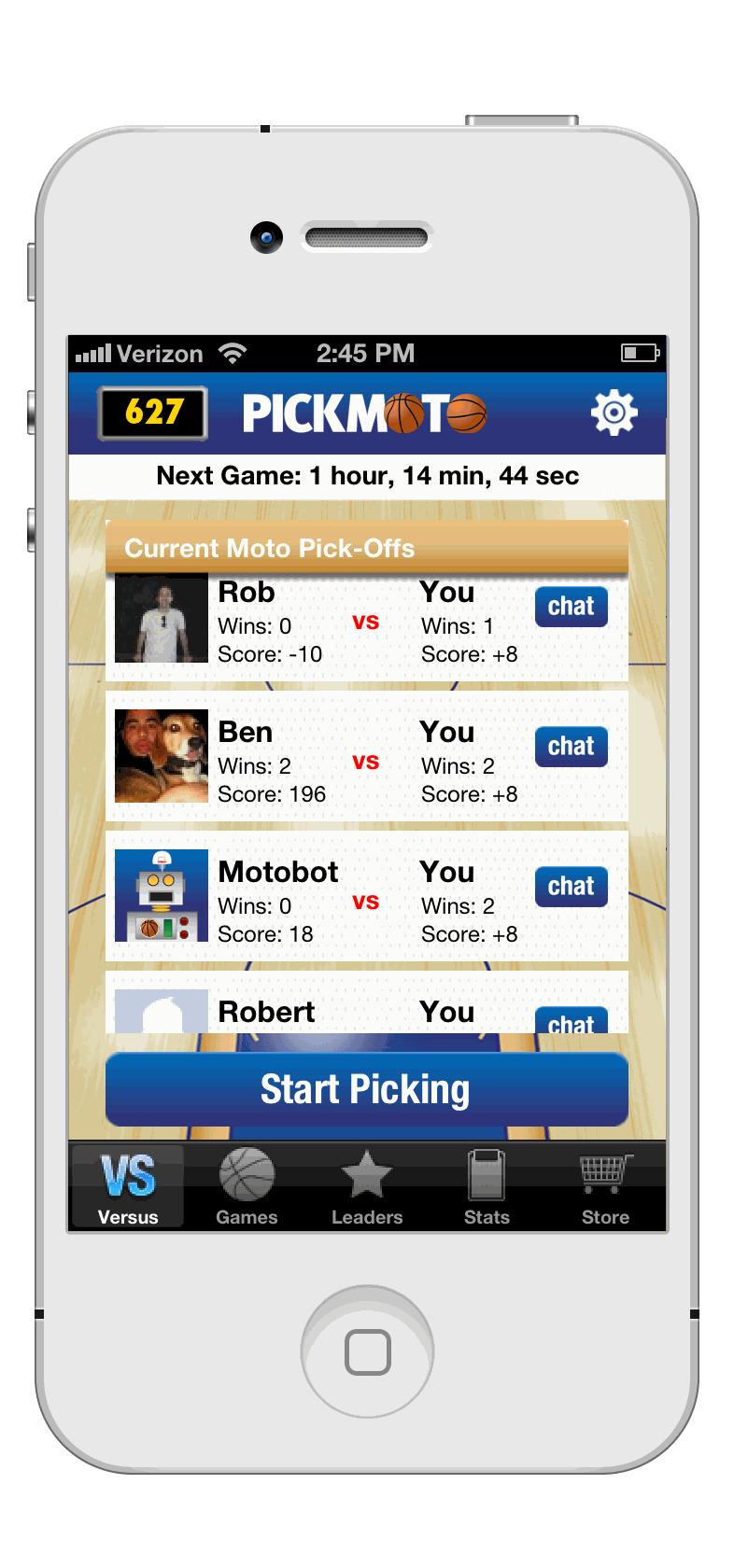
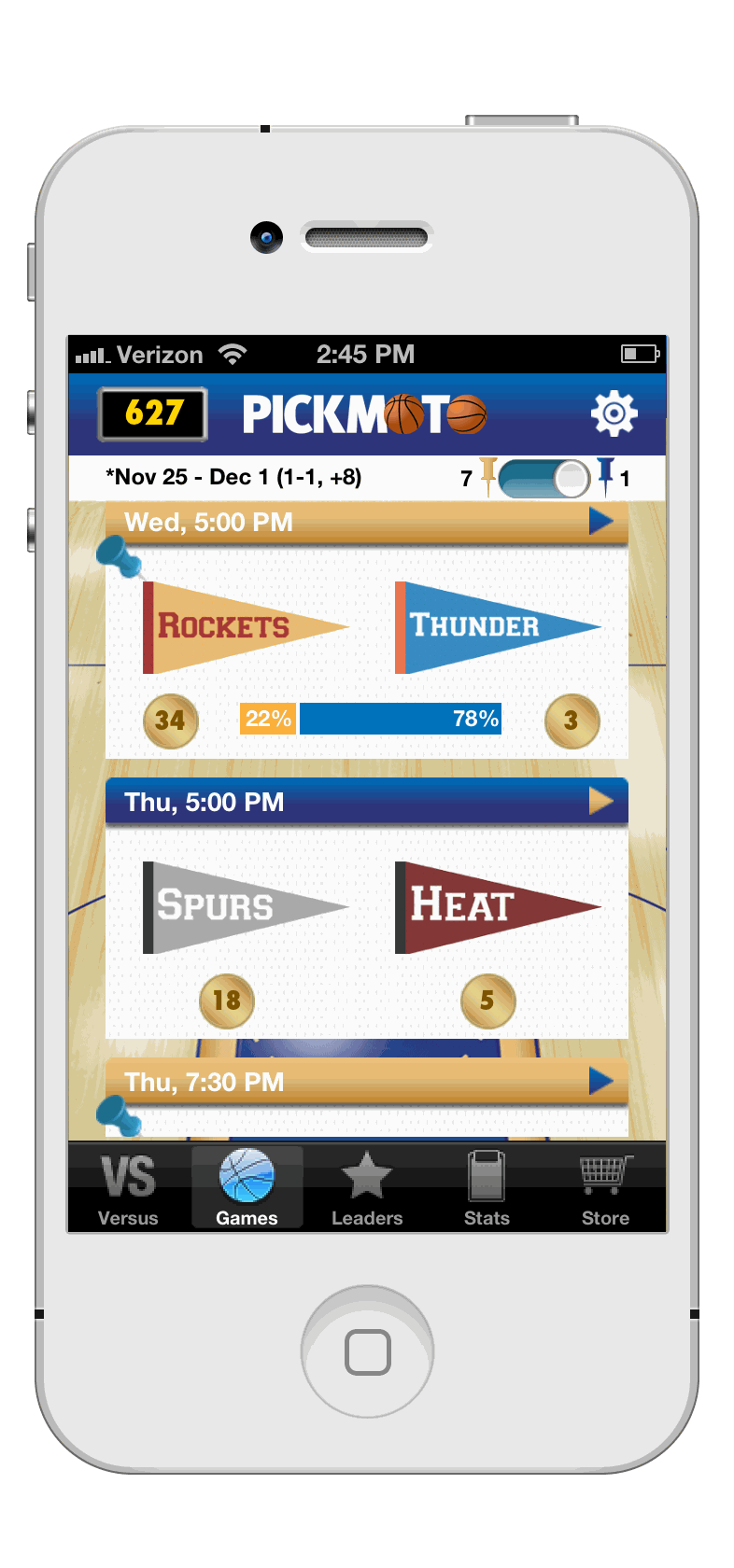
The NBA edition leaned into competition: Moto Pick-Offs put you head-to-head against friends — or Motobot — with running win-loss records and chat one tap away, live community pick percentages on every matchup, and a trophy case to show for it.
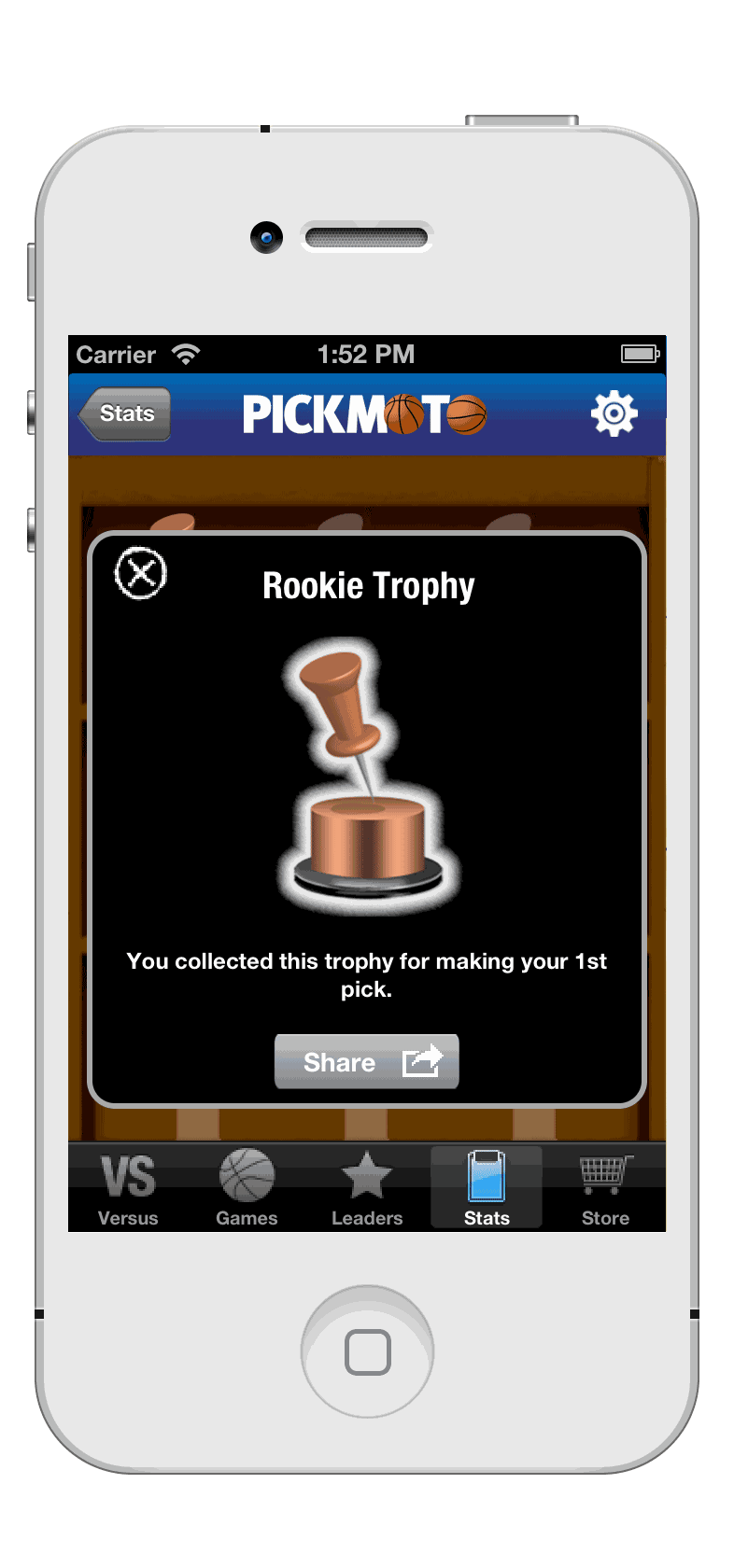
NFL Playoff Edition — Pools & Wagers
The postseason update made group play the main event.
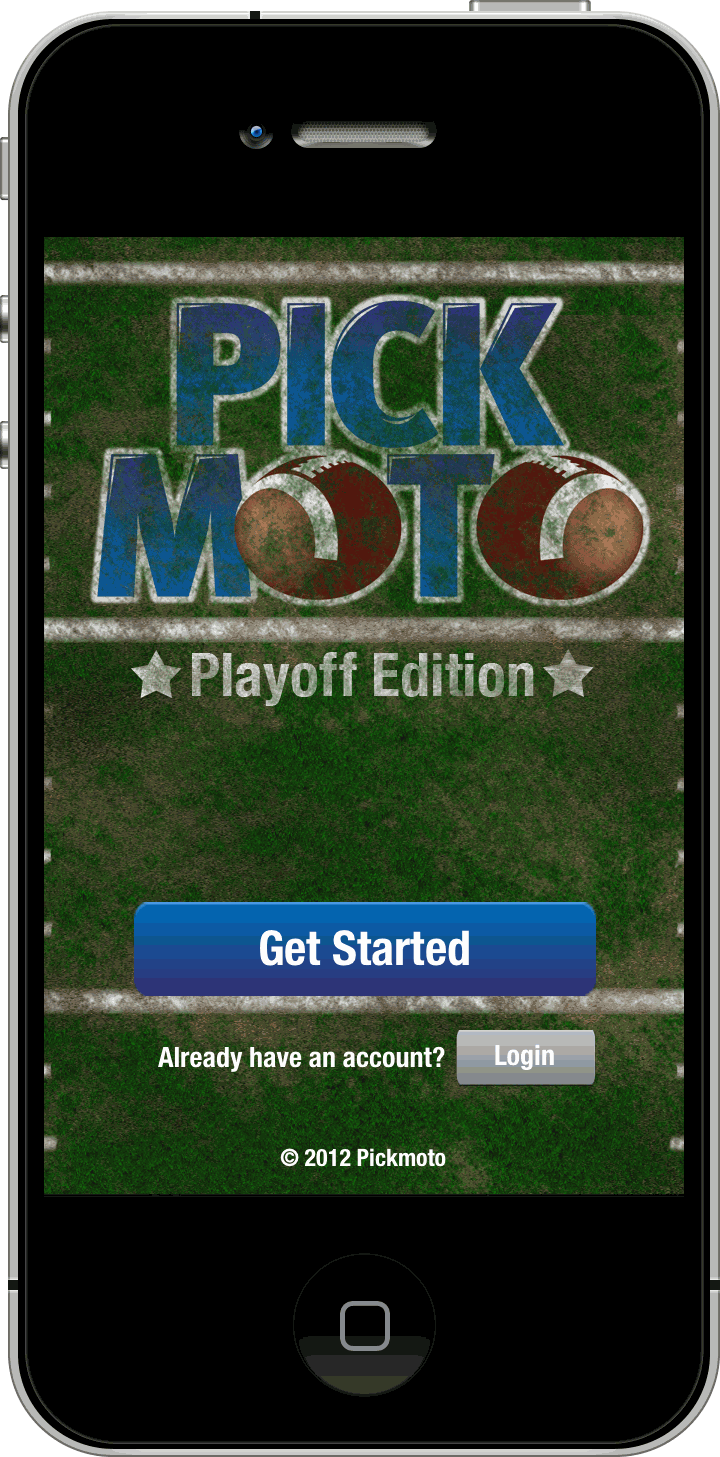
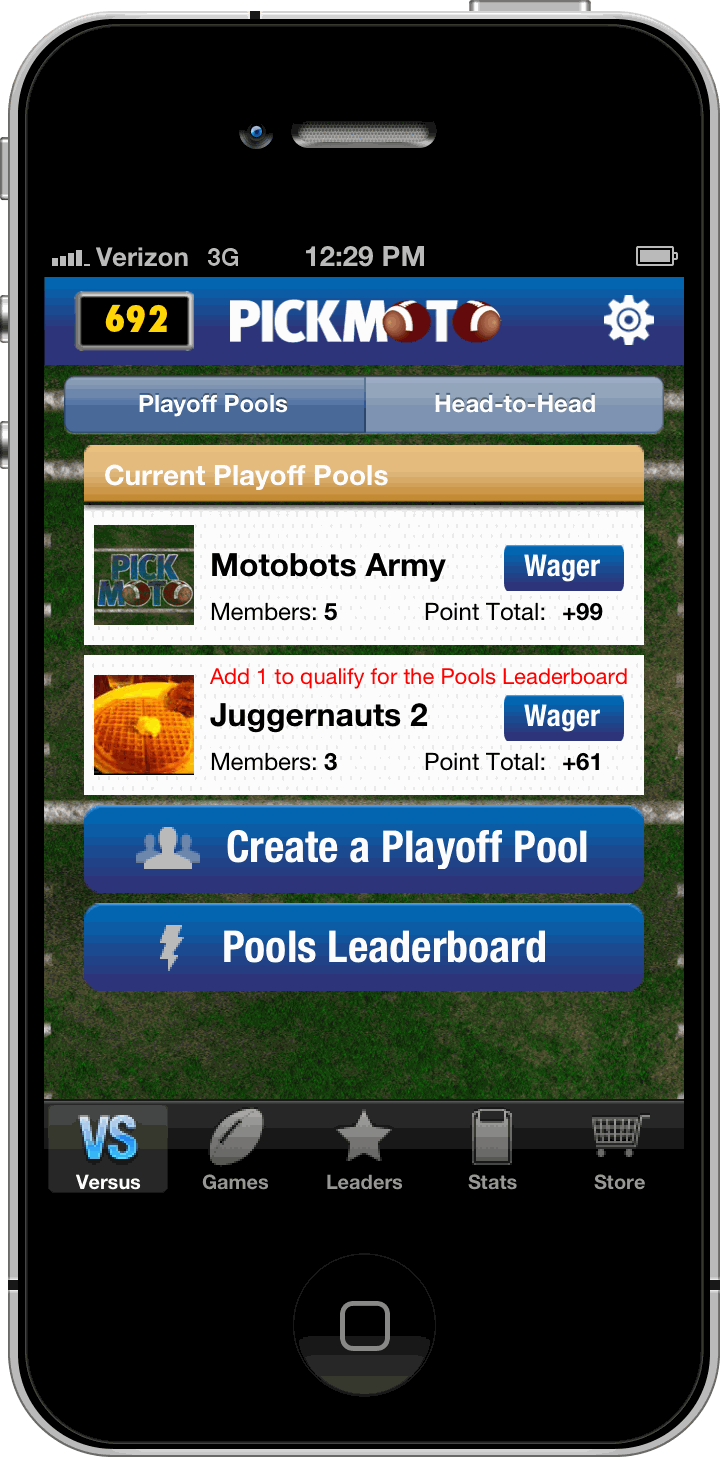
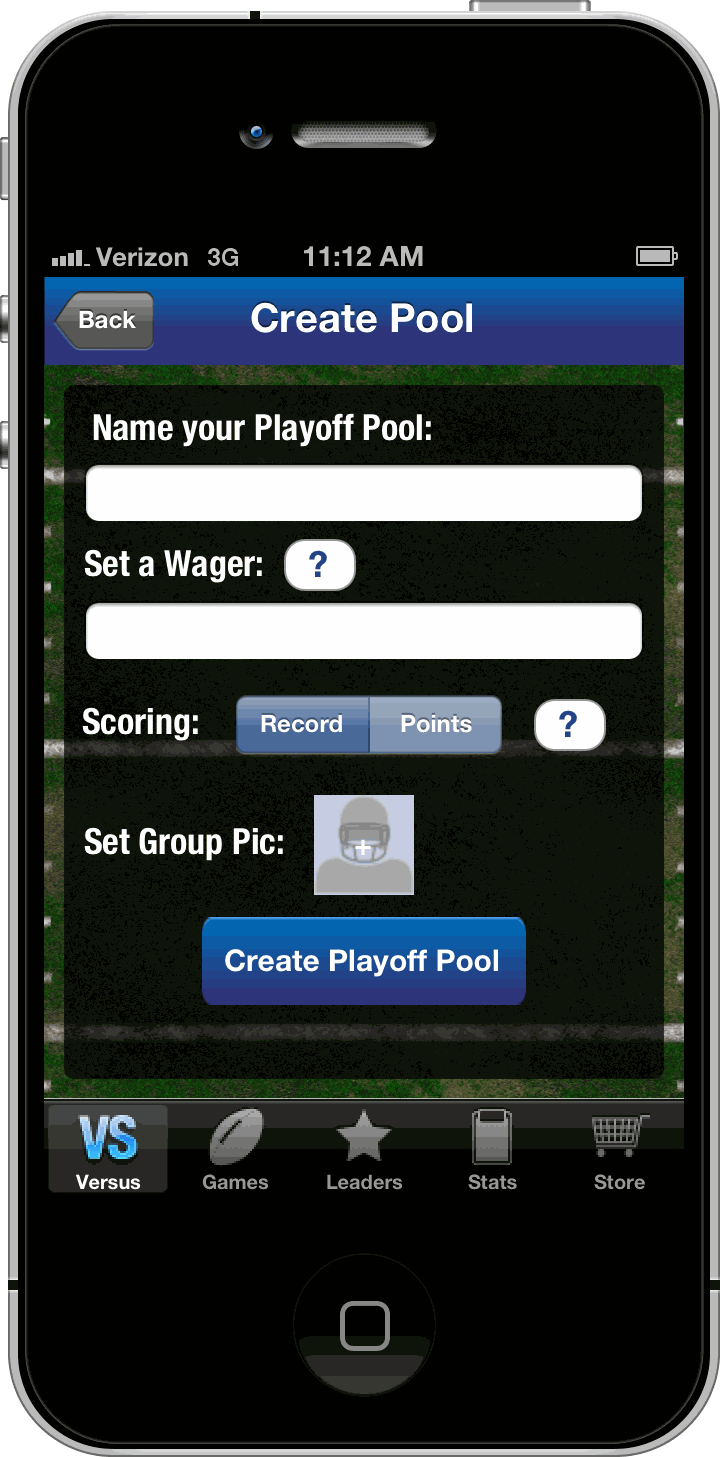
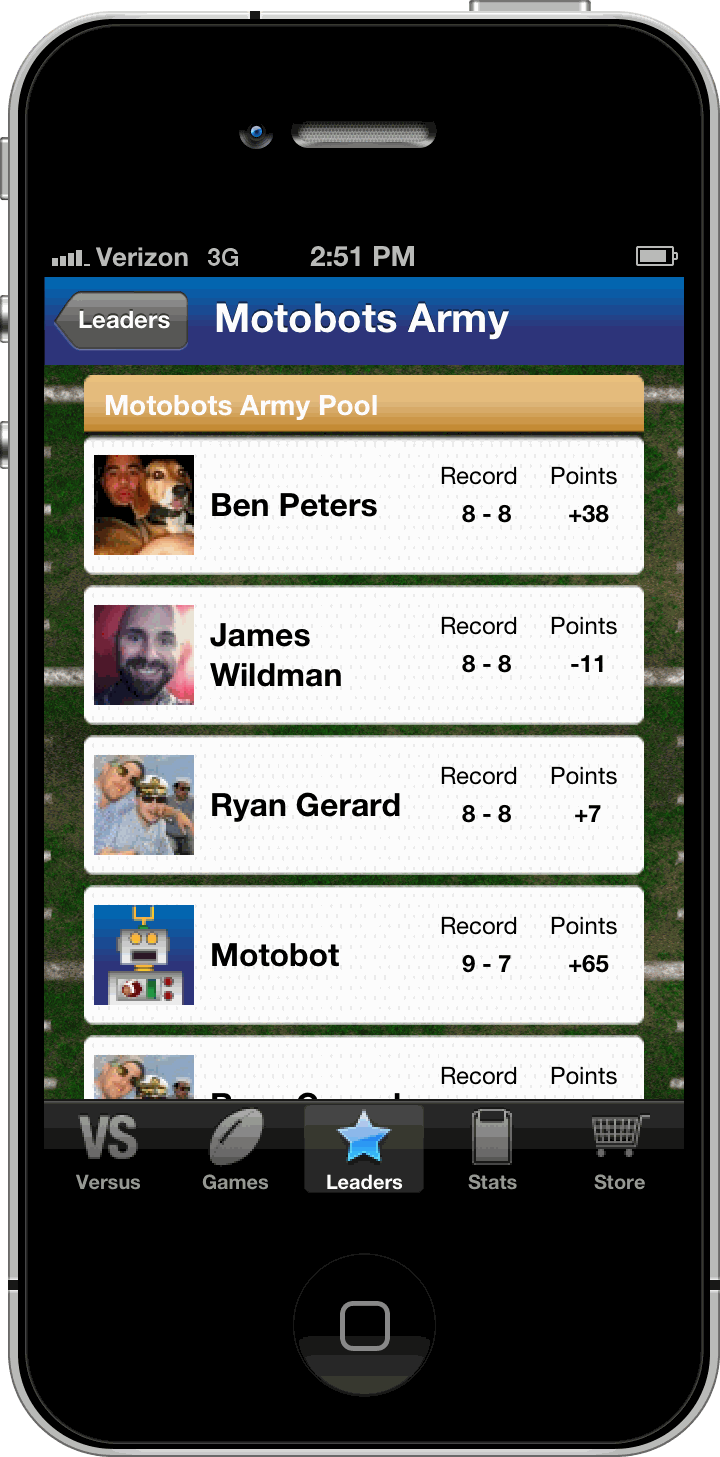
For the playoffs, Pickmoto shipped an update that put pools front and center: browse the current playoff pools and back your call with a wager, or create your own — name it, set the wager, choose a scoring rule (record or points), and invite a group — then track everyone on the pool standings. It was the friendly-wager mechanic the broader ecosystem wasn't yet built to fully support.
March Madness — The Tournament Experience
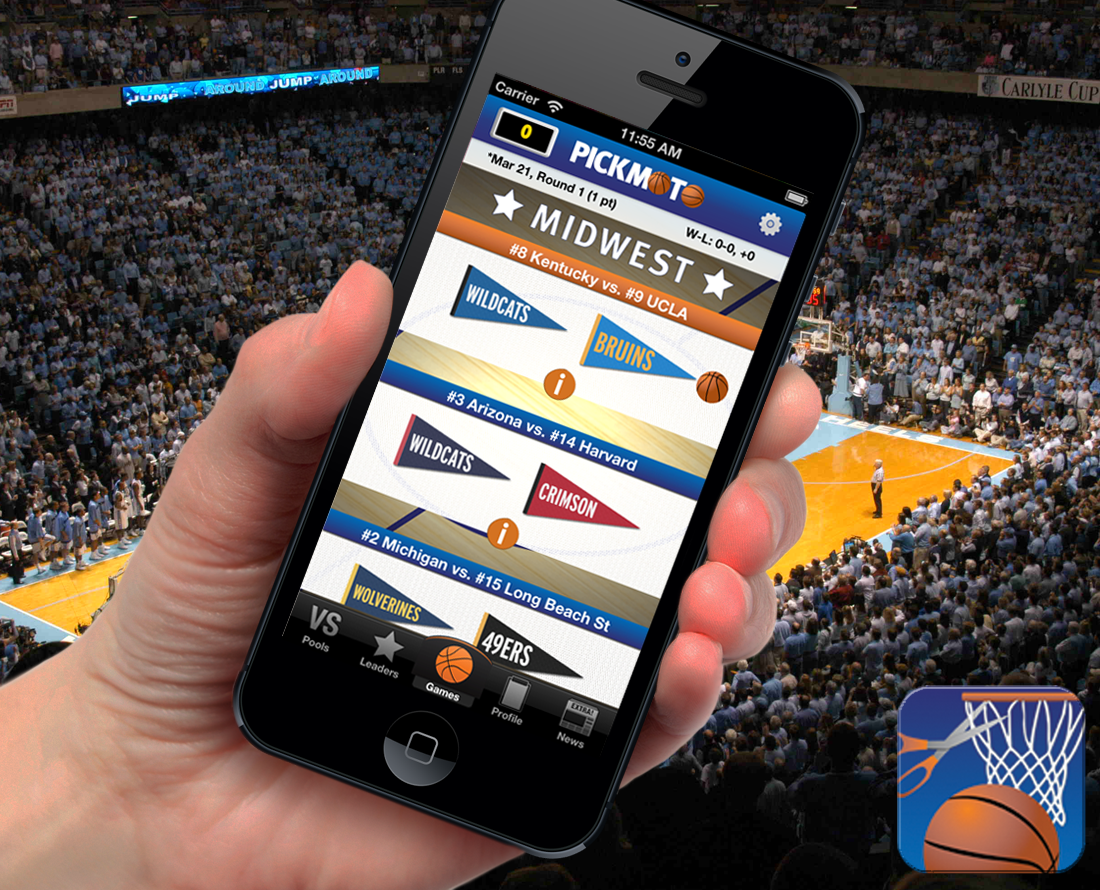
The final major release, and the product at its sharpest — and its biggest: 15,000 downloads in its first two weeks and more than 1 million picks.
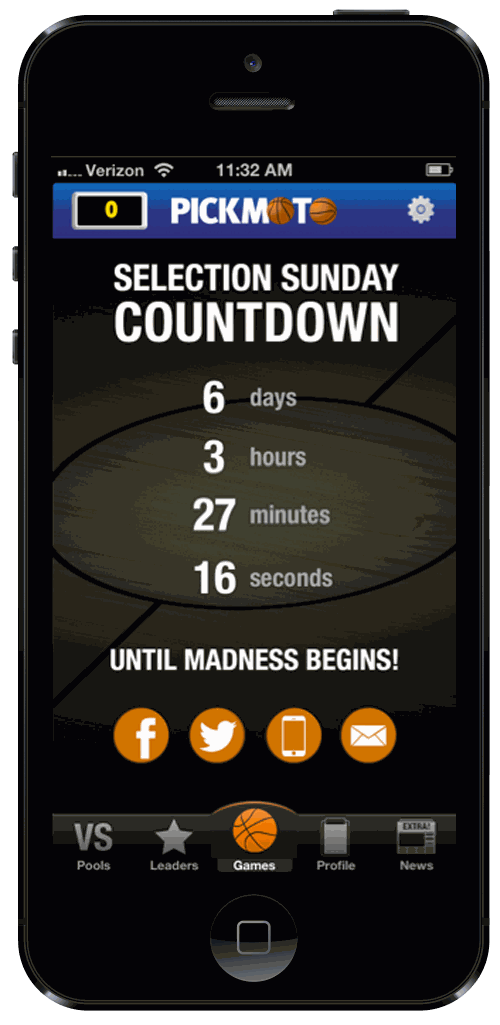
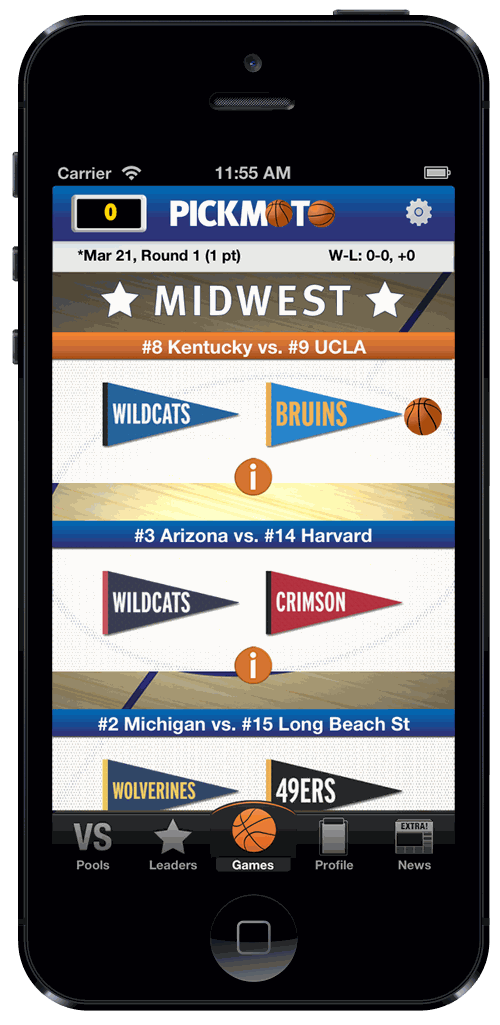
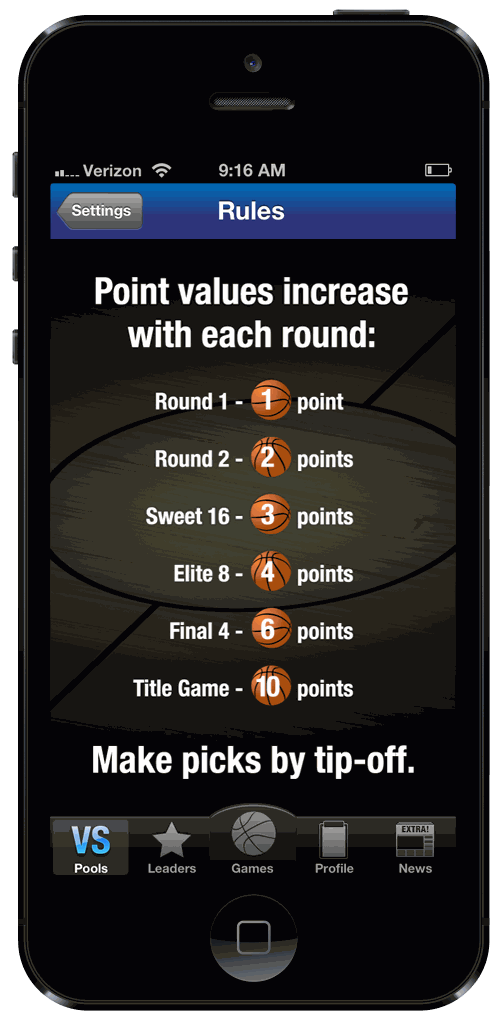
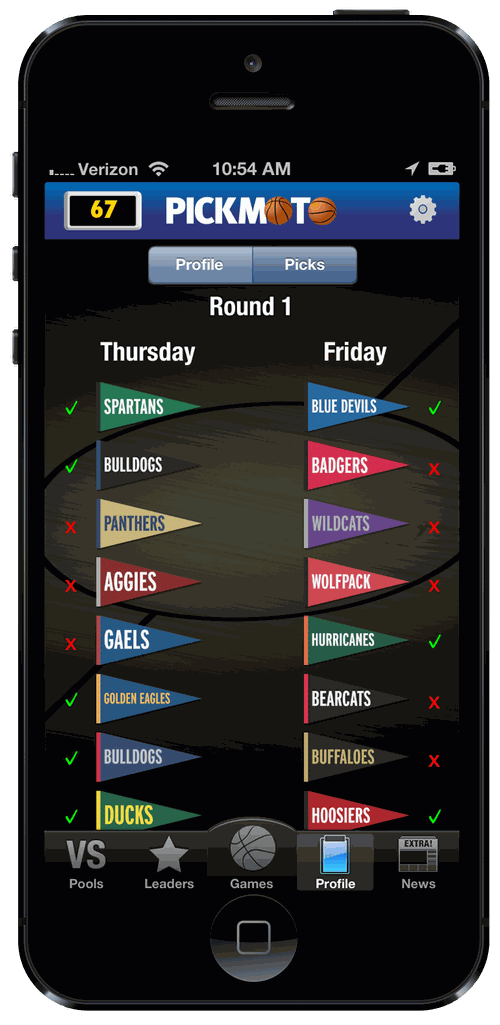
A Selection Sunday countdown built anticipation, and instead of locking a full bracket before tip-off, fans picked round by round — joining pools mid-tournament and earning escalating point values that rewarded conviction as the field narrowed.
Pickmoto 3.0 Concepts — The Platform Vision Concept · Unreleased
A ground-up redesign pointed at a broader social sports platform — designed, never shipped.
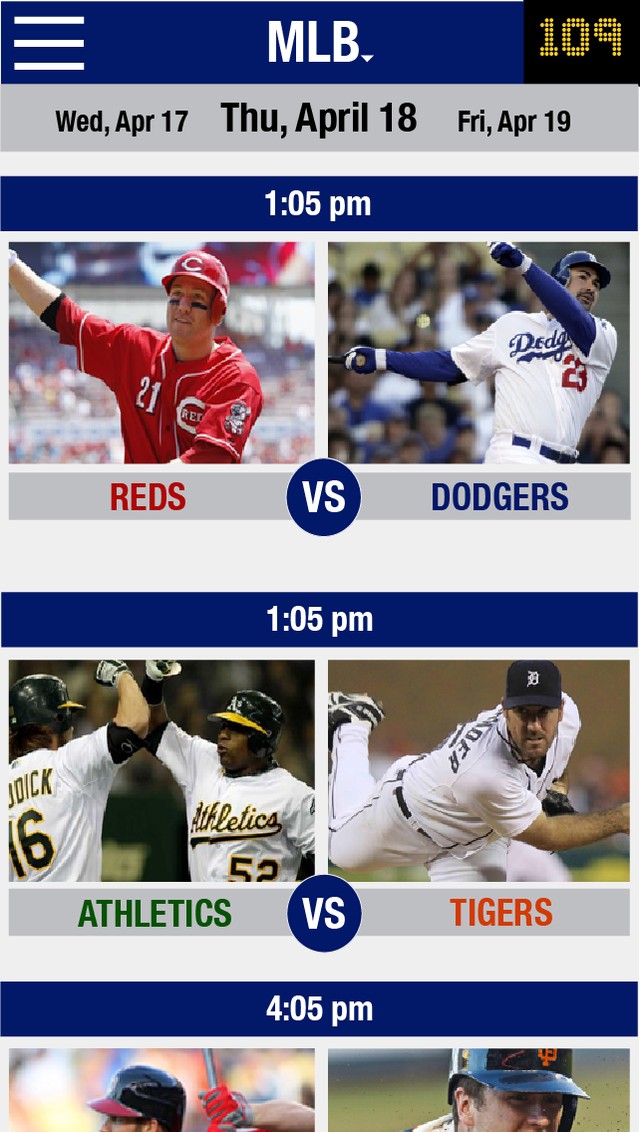
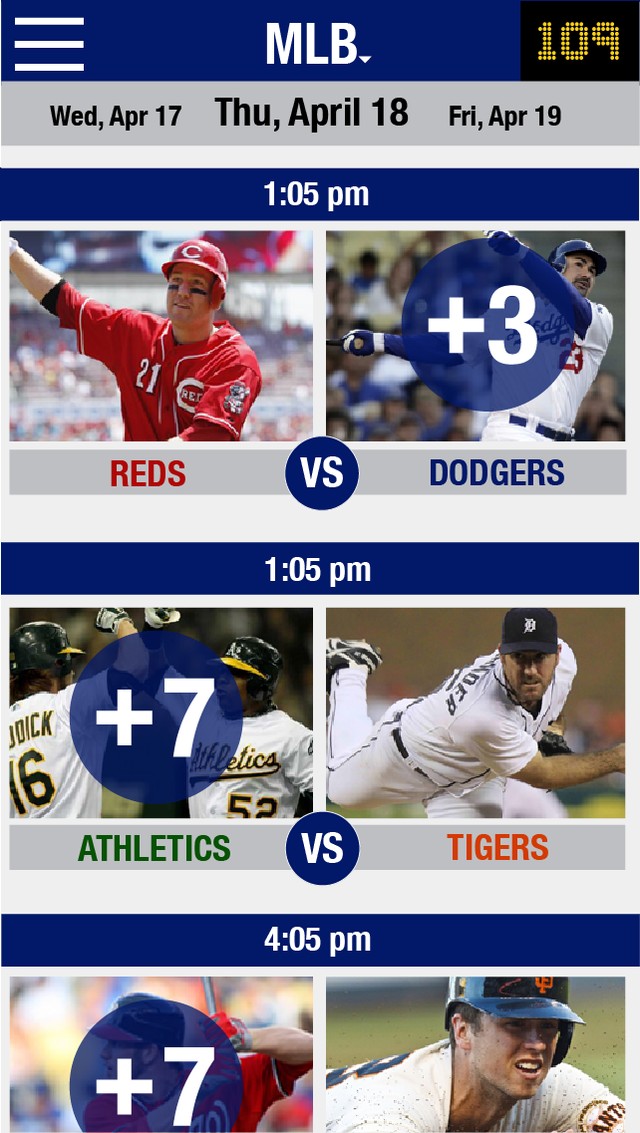
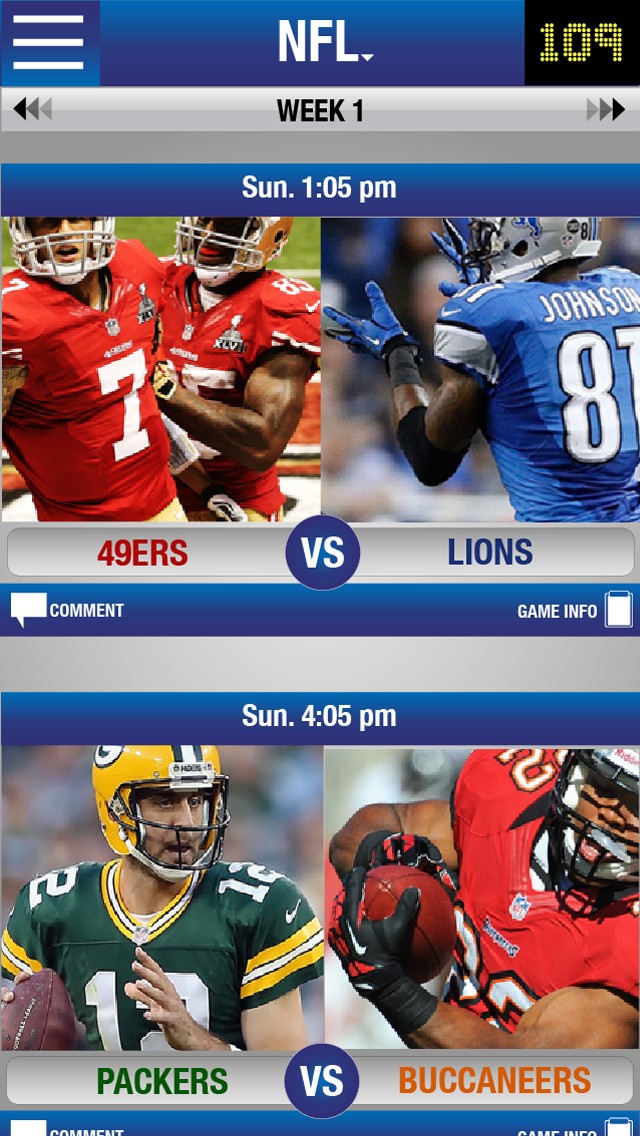
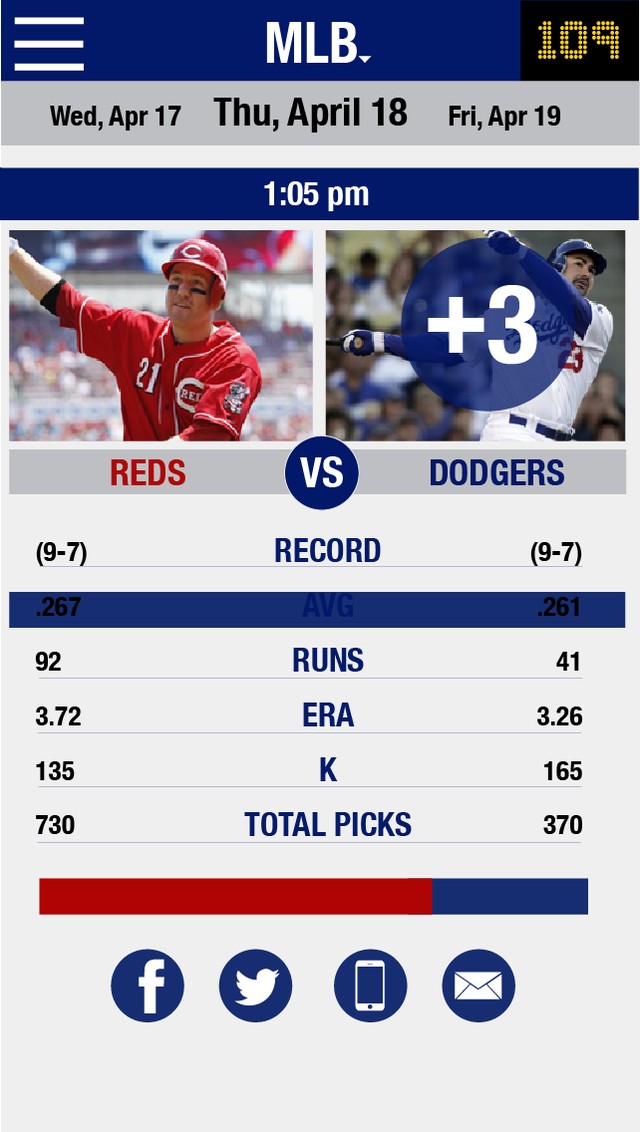
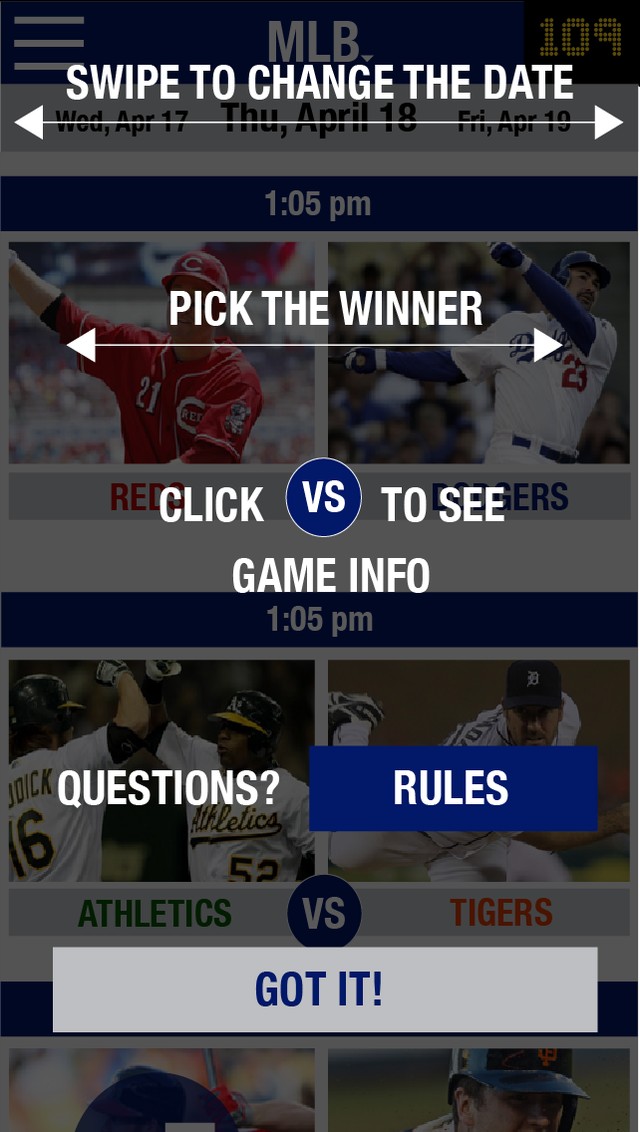
Photography became the interface — full-bleed player matchups were the pick targets themselves — with a flatter visual system, gesture onboarding overlaid on the live UI, and expandable in-card stats. Built and iterated for MLB and designed to scale to every sport. These are the concept designs, shown without a device frame because the redesign never reached release.

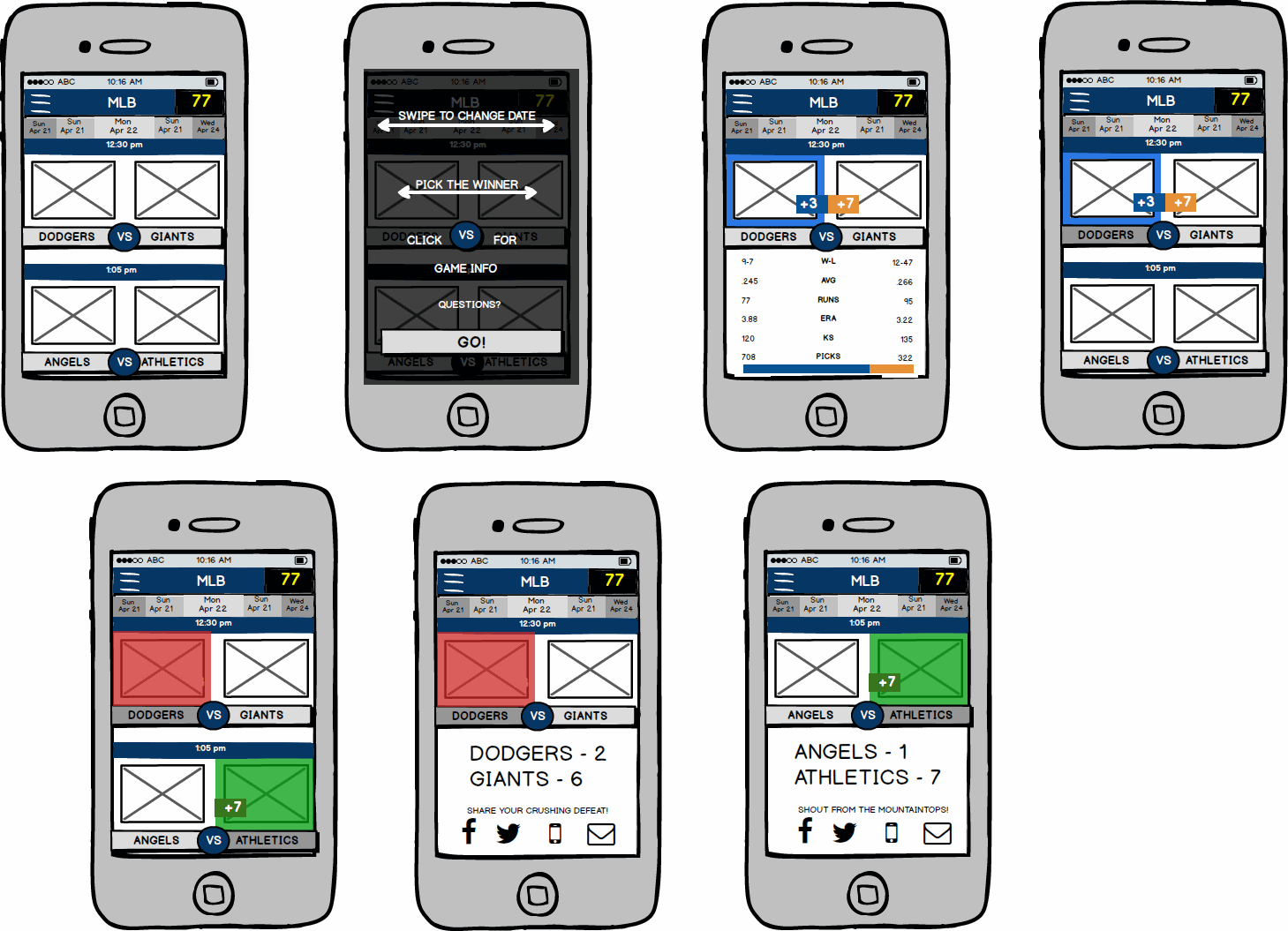
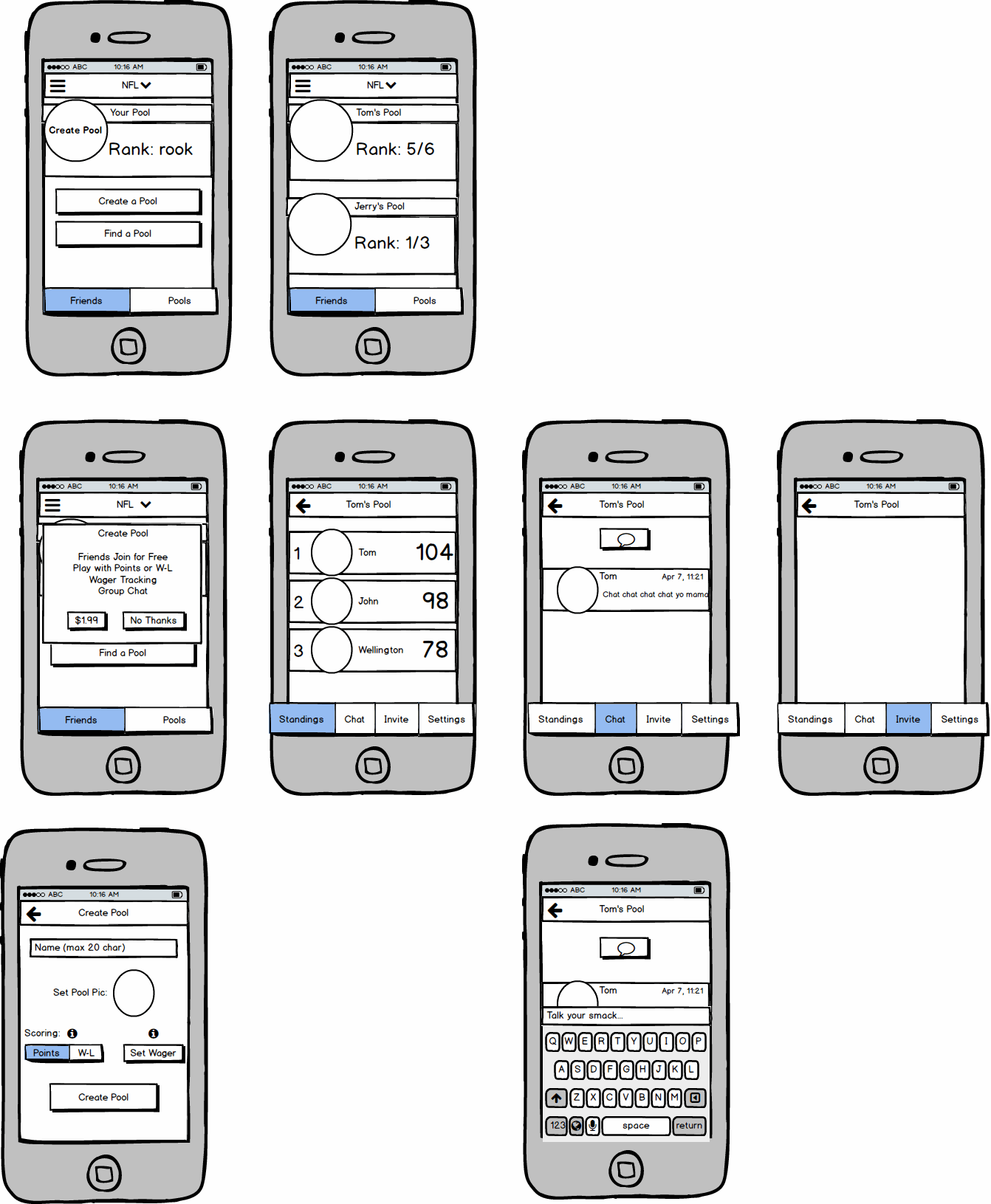
Before any of the hi-fi work, the 3.0 platform was wireframed end-to-end in Balsamiq — including features the polished MLB concept never reached, like pools with standings, chat, and wager setup.
Designing Around One Action
Every design decision in Pickmoto served the same goal: protect the simplicity of the pick while layering in depth for the users who wanted it. Six themes defined the product's UX.
Simplifying Sports Predictions
No rosters, no drafts, no waiver wires — users picked winners in seconds.
The scoring system did the strategic work: less popular picks were worth more points, rewarding knowledge and confidence over chalk. A casual fan could play in thirty seconds a day; a die-hard could hunt upsets all week.
Progressive Disclosure of Game Data
Stats existed to serve the pick, not the other way around.
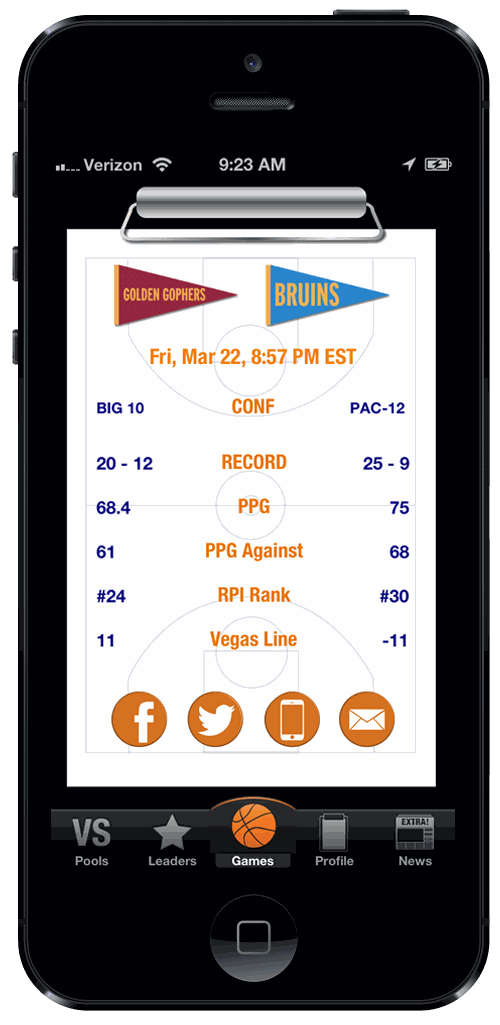
Records, points per game, rankings, and the Vegas line were one tap away behind each matchup — available to users who wanted an informed pick, invisible to users who didn't. In the 3.0 concepts this became expandable in-card stats, keeping data and action on the same screen.
Social Competition
The product's gravity came from other people.
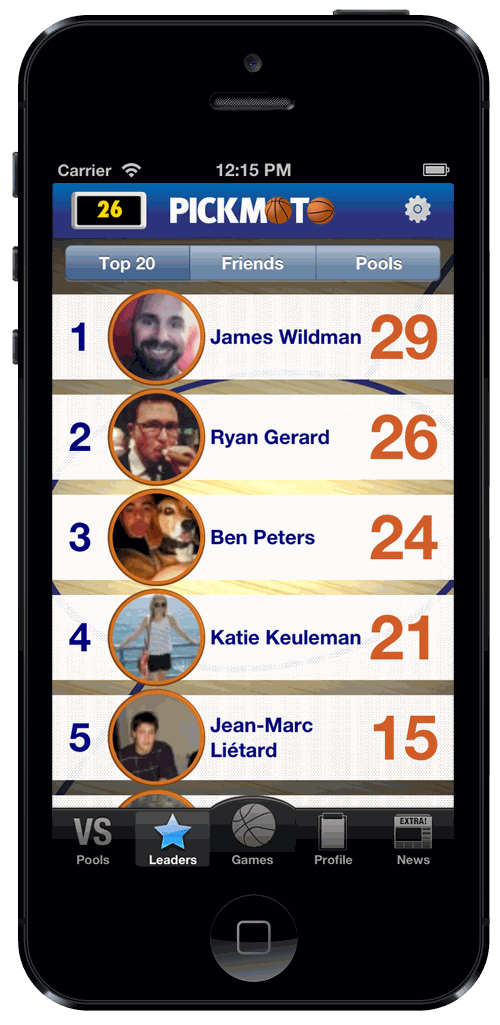
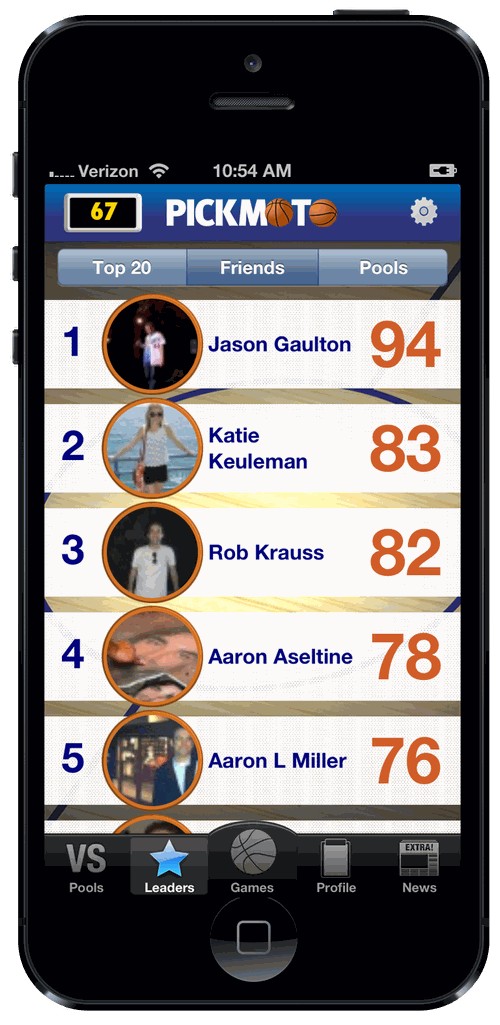
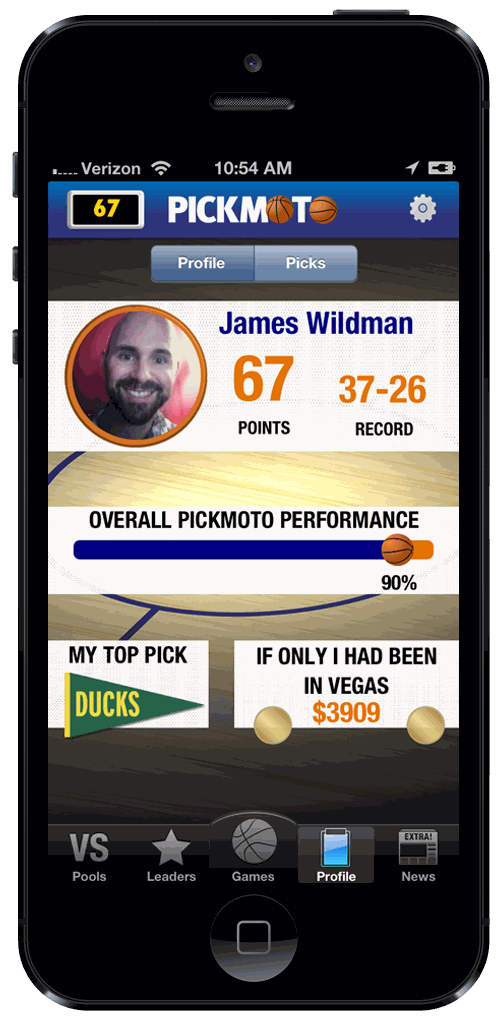
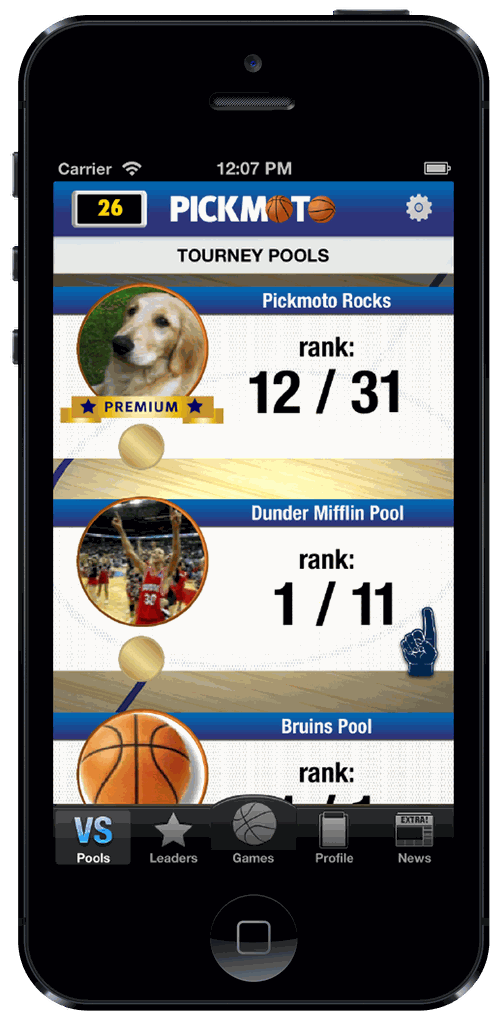
Leaderboards ranked the top twenty, friends, and pools; profiles tracked points, records, and top picks; head-to-head pick-offs with chat made every game day a direct challenge. Invites were woven through the experience — 4,500+ were sent in the first three months.
Pools & Group Play
The office pool was the product's true ancestor, so Pickmoto made it native.
Create a pool, invite the group, and follow your rank in each one all season. Pools shifted the product from a solo prediction game toward organized group competition — the behavior that turned out to matter most.
Onboarding & Tutorials
Each edition taught the game in its own visual language.
The iPad's chalkboard playbook explained play-to-lead-to-win like an X's-and-O's diagram, while 3.0 moved to gesture callouts overlaid on the live interface — teaching by pointing at the real thing instead of interrupting with a separate tour.
Monetization Concepts
Gold Pins — purchasable pick insurance and flair — sold 1,000 units and proved users would pay inside a free sports game.
Pickfolio explored portfolio-style season play, and branded merchandise extended the pennant-heavy identity into the physical world. Monetization stayed adjacent to the pick, never in its way.

How the Market Responded
Pickmoto's growth came almost entirely from the product itself — invites, pools, and pick-offs pulled new users in, and the one-tap mechanic kept them playing week after week. The first three months brought 9,000+ users and half a million picks; the March Madness Tournament Edition then became the breakout, adding 15,000 downloads in its first two weeks and pushing picks past 1 million. (Full metrics on the home page.)
Chart Position
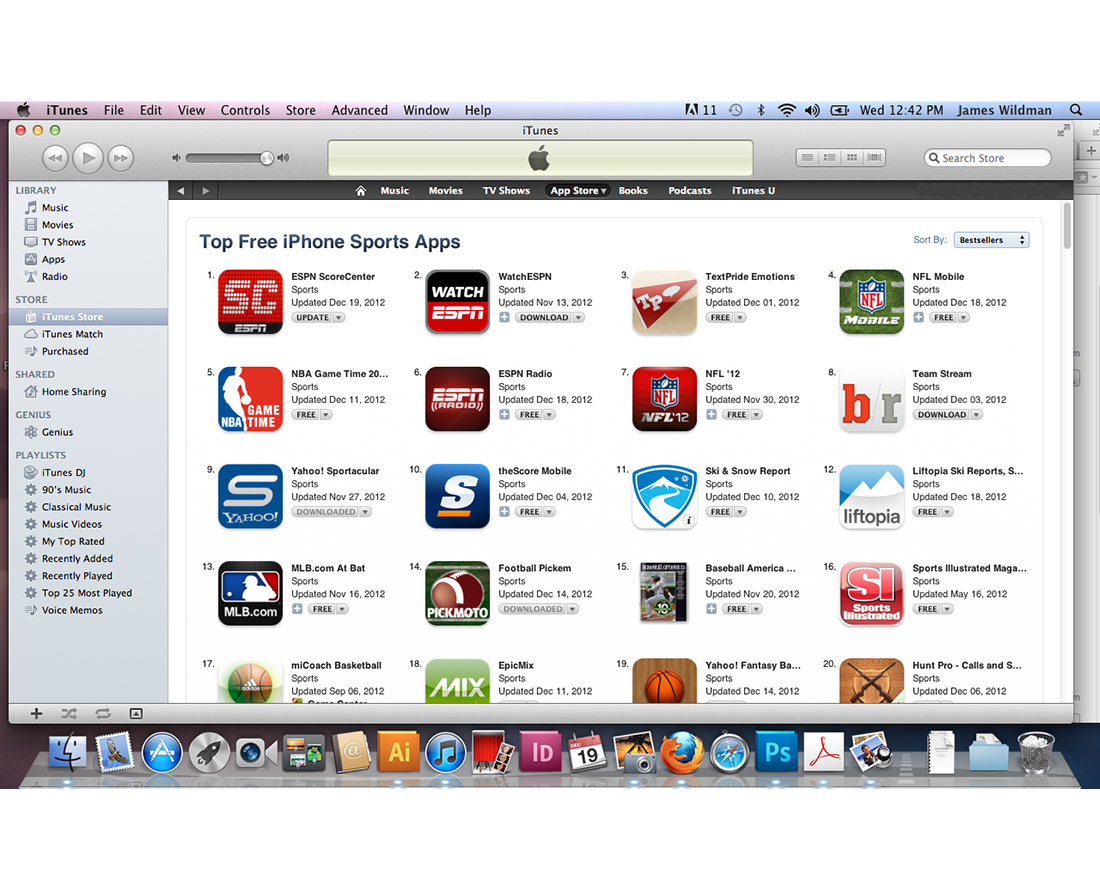
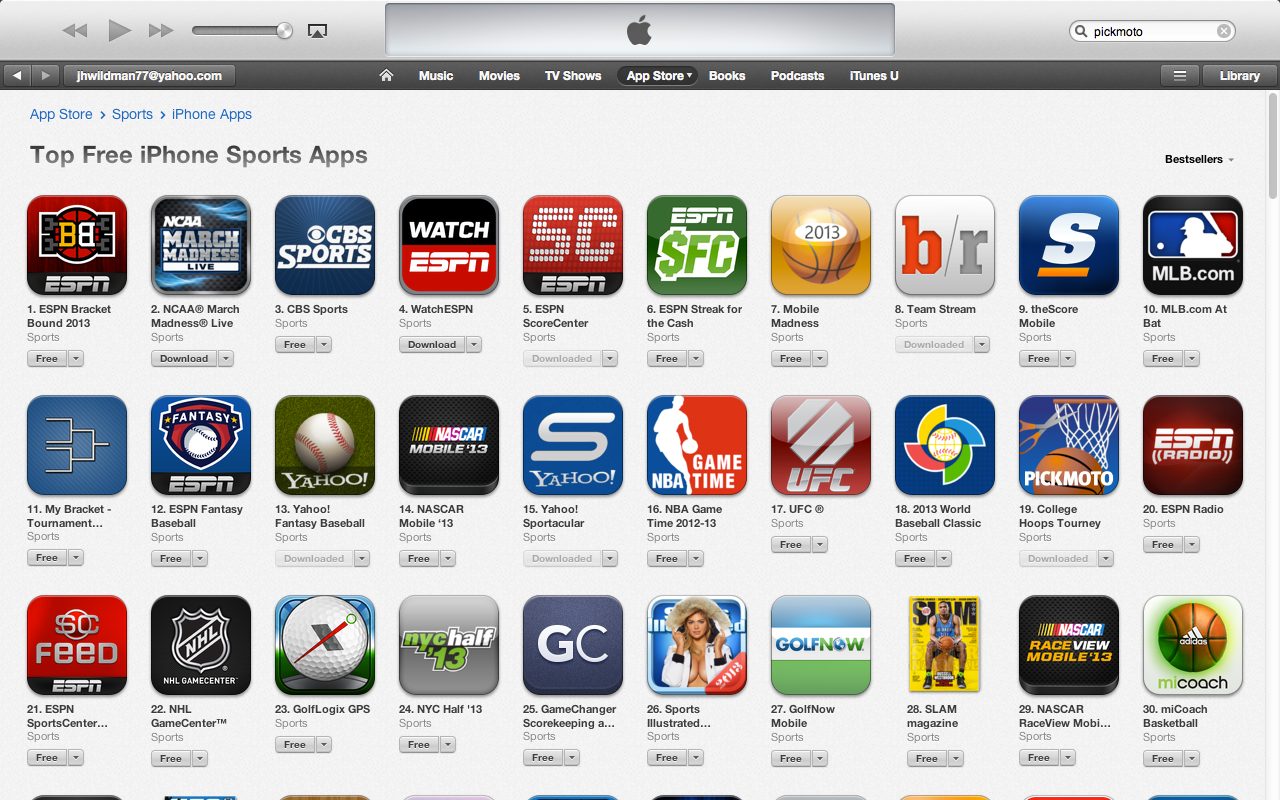
Pickmoto charted twice on the Top Free iPhone Sports Apps list. At launch it hit #14 (December 2012), alongside ESPN, NFL Mobile, Yahoo, and MLB.com. Then during the tournament, the Tournament Edition — listed as "College Hoops Tourney" — charted at #19, sitting right among ESPN Bracket Bound, NCAA March Madness Live, and CBS Sports — a three-person startup holding its own against the giants.
Press




Coverage tracked the product from launch to tournament.
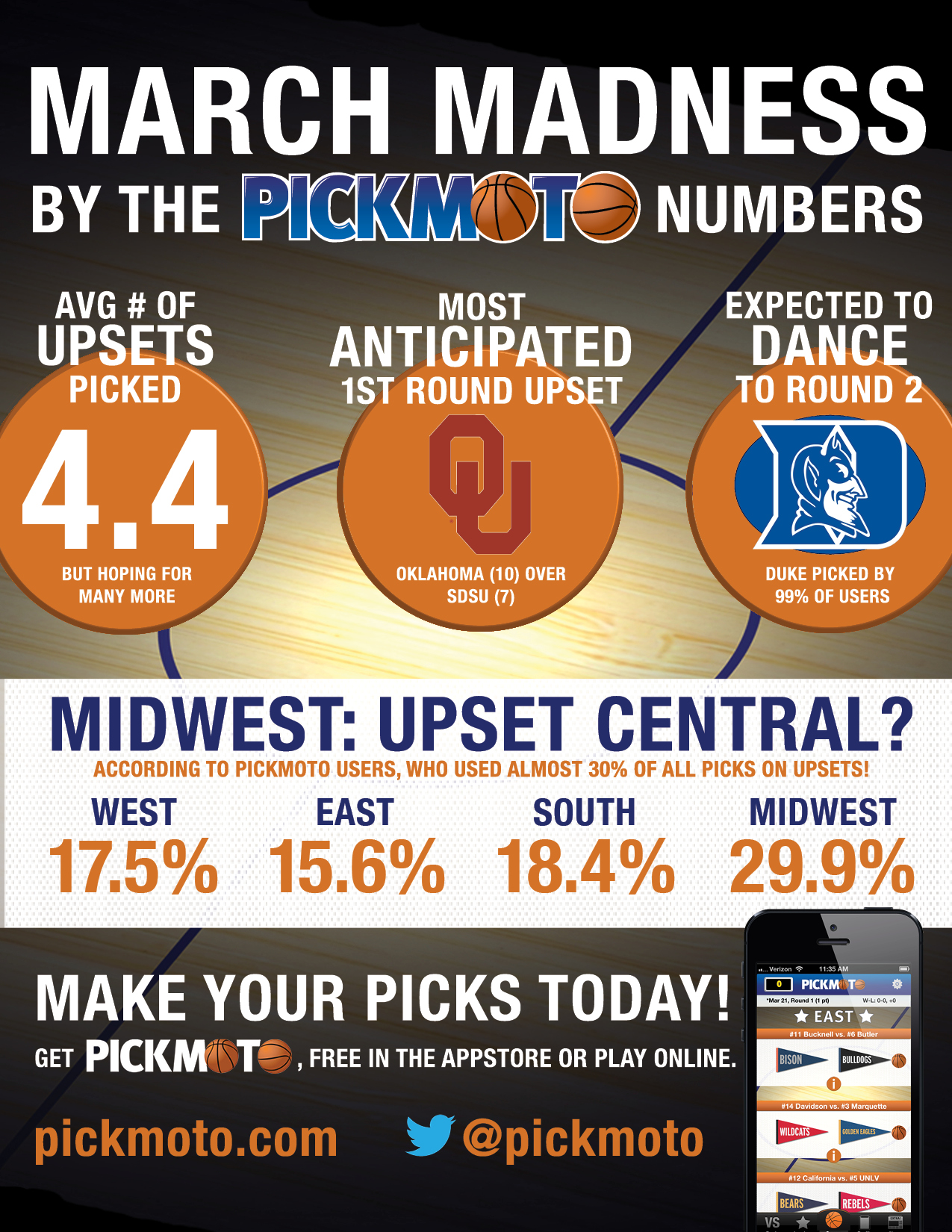
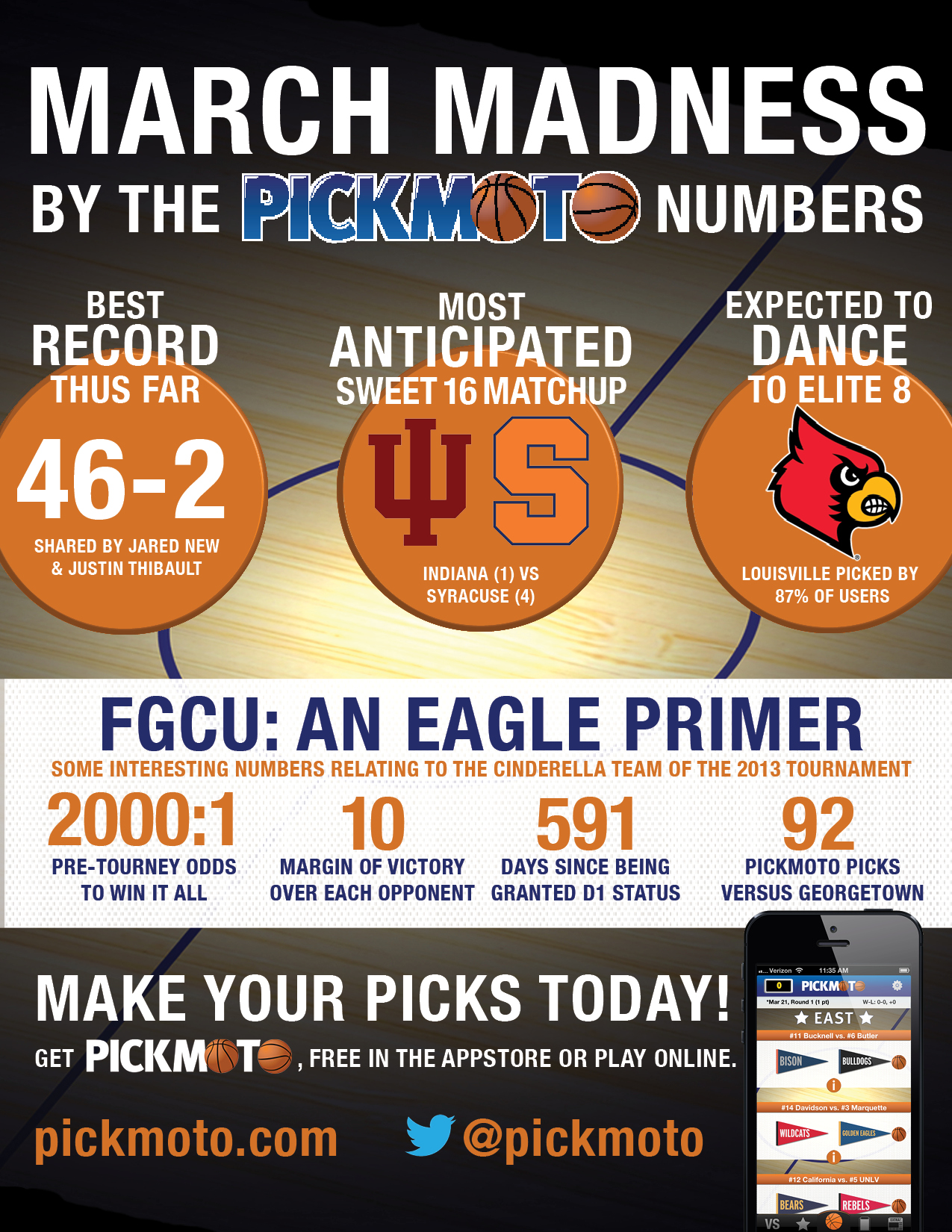
VentureBeat's Dean Takahashi covered the launch in September 2012; that November, Chat Sports reviewed Pickmoto at 4/5 stars, singling out the design; and by the 2013 tournament, TechCrunch featured Pickmoto in its March Madness roundup — citing the round-by-round pick mechanic, mid-tournament pools, and the 15,000-downloads-in-two-weeks run. The team also published "By the Numbers" infographics built from Pickmoto's own pick data, turning the user base into a story sports press could quote.
"So simple to use, extremely addicting, and has such a stellar design."
"A young Bay Area startup called Pickmoto wants to make it easier for basketball fans to create pools, make picks and goad their friends into making horrible picks."
What Users Said
The football app held a 4.6-star average across 53 reviews. The same themes kept surfacing — the simplicity, the social hook, the surprising converts, and the accessibility.
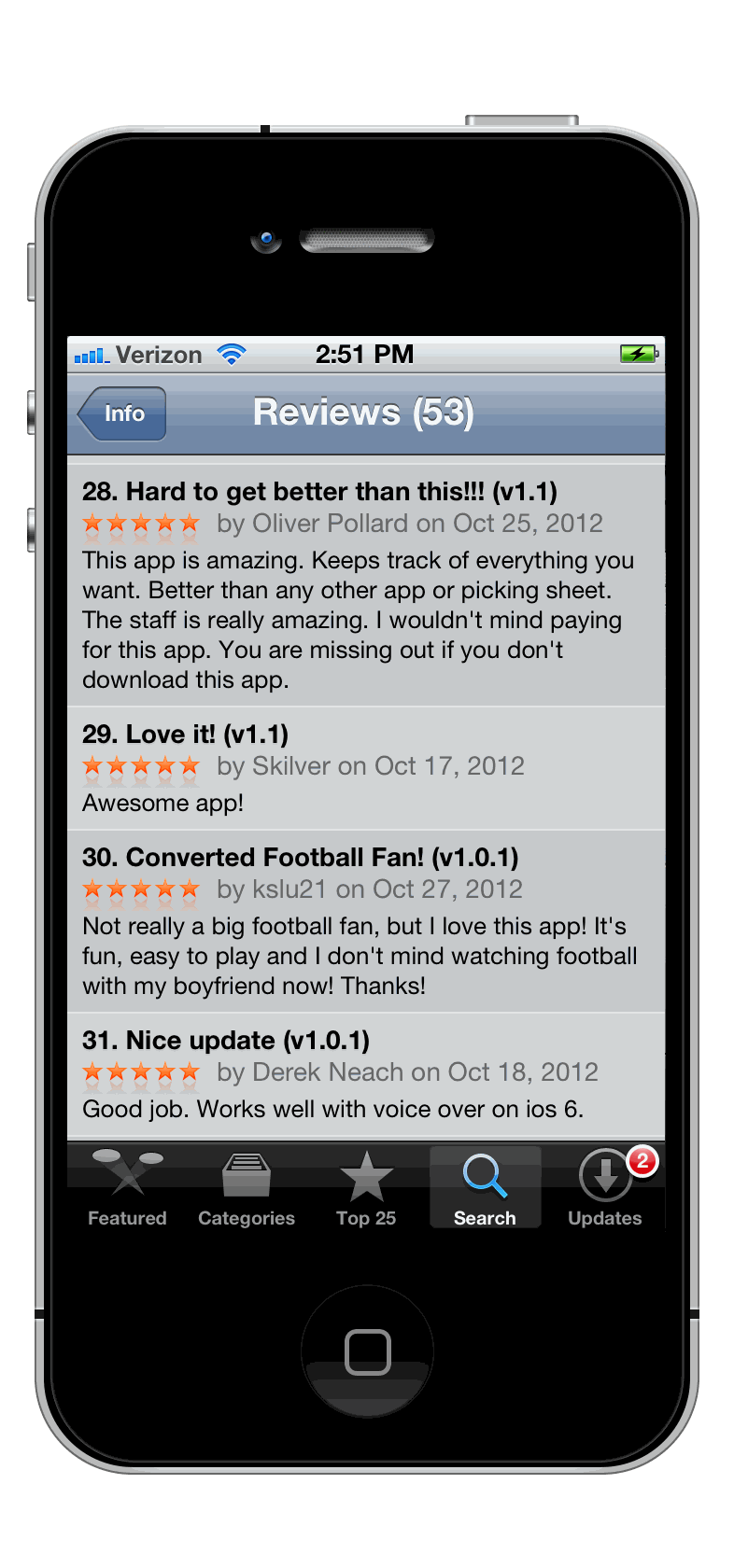
"This app is amazing. Keeps track of everything you want. Better than any other app or picking sheet… You are missing out if you don't download this app."
"Not really a big football fan, but I love this app! It's fun, easy to play and I don't mind watching football with my boyfriend now! Thanks!"
"Good job. Works well with VoiceOver on iOS 6."
Beyond Consumer
Beyond consumer adoption, Pickmoto attracted interest from potential white-label partners including Sports Illustrated and a national restaurant chain, suggesting applications beyond direct-to-consumer sports gaming into fan engagement, promotions, and group competition.
Launch Marketing
Early, Not Wrong
Pickmoto taught me one of the most important product lessons of my career: users rarely care about the feature itself; they care about what the feature enables.
We initially thought we were building a sports prediction app. What we learned was that users were drawn to competition, community, bragging rights, and the social dynamics of office pools and friend groups.
Looking back, the strongest opportunity was not simply helping users make picks. It was helping groups organize, compete, and settle friendly wagers around sports. At the time, payment infrastructure, regulatory clarity, and the broader sports gaming ecosystem were not yet ready for a small startup to fully support that experience.
"We were early, not wrong."
Pickmoto identified many of the behaviors that now power modern sports gaming platforms: social competition, group play, simplified participation, mobile-first engagement, and money-adjacent sports experiences. The project shaped how I think about product design today: successful products require not only strong UX, but the right ecosystem around them.
What It Gave the Rest of My Career
Strategy Before Screens
Co-founding meant owning the why and the what before the how — a habit that never left, from fintech dashboards to NIH research platforms.
Mobile-First Instincts
Designing for thumbs, glances, and seconds of attention in 2012 built the interaction fundamentals everything since has stood on.
Behavior Over Features
Watching pools out-pull every feature we shipped taught me to design for what users are trying to feel and do — not what the product technically does.